
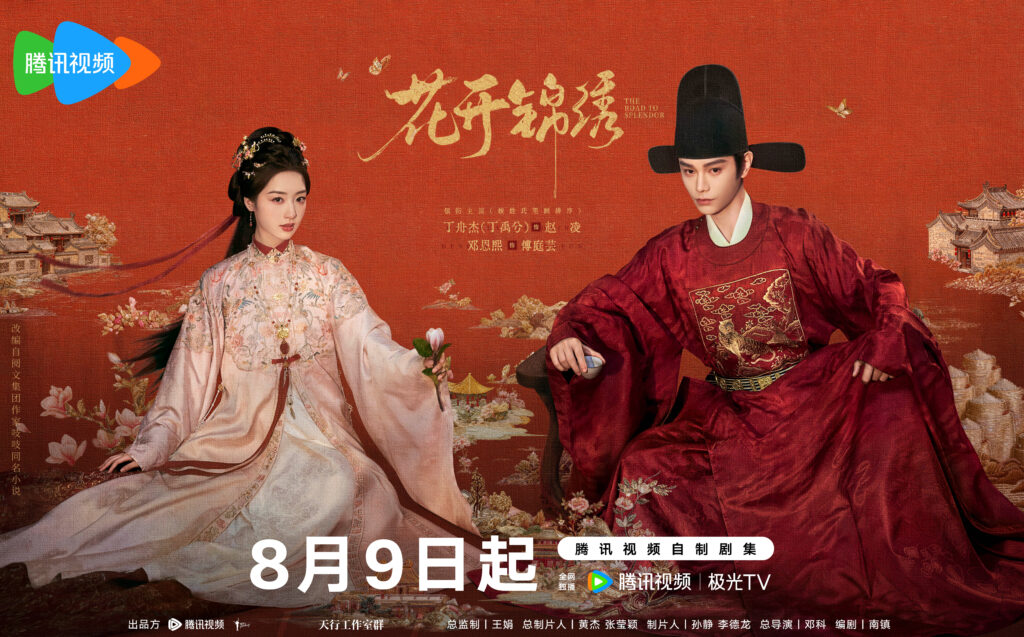

Review: The Road to Splendor (2026) 花开锦绣
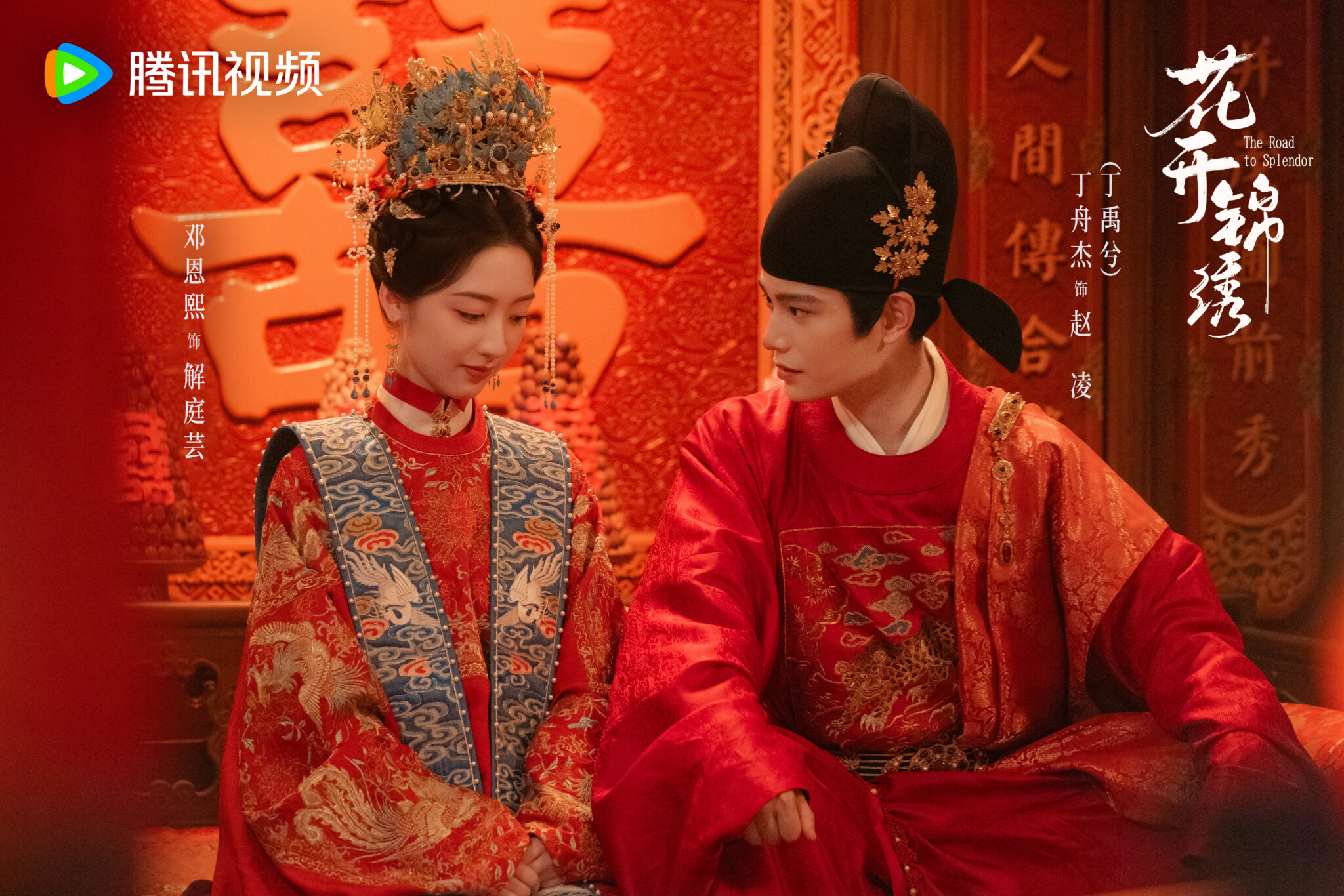
Summary: Zhao Ling (ft Ding Yu Xi), a bold and big hearted private-salt smuggler, comes from humble origins, but he harbors great ambitions. He meets Fu Tingyun (ft Deng En Xi), a young lady from a prestigious family who has been falsely accused of having an illicit affair, and the two are forced to flee together.
They endure repeated challenges from both their families and from court to fight against their fate. Initially skeptical of each other, they eventually join forces to support each other and develop romantic feelings. Amid multiple trials and tribulations, their love endures to become a legendary romance.
Platform: Tencent
Episodes: 36
Airing Date: Aug 9, 2026
Warnings – Mild violence, bloody scenes
Rating: 7.3/10 – While not perfect, this drama had strong writing, layered characters, intelligent strategy, cultural depth, and beautiful production that made it my favorite costume drama of the summer.
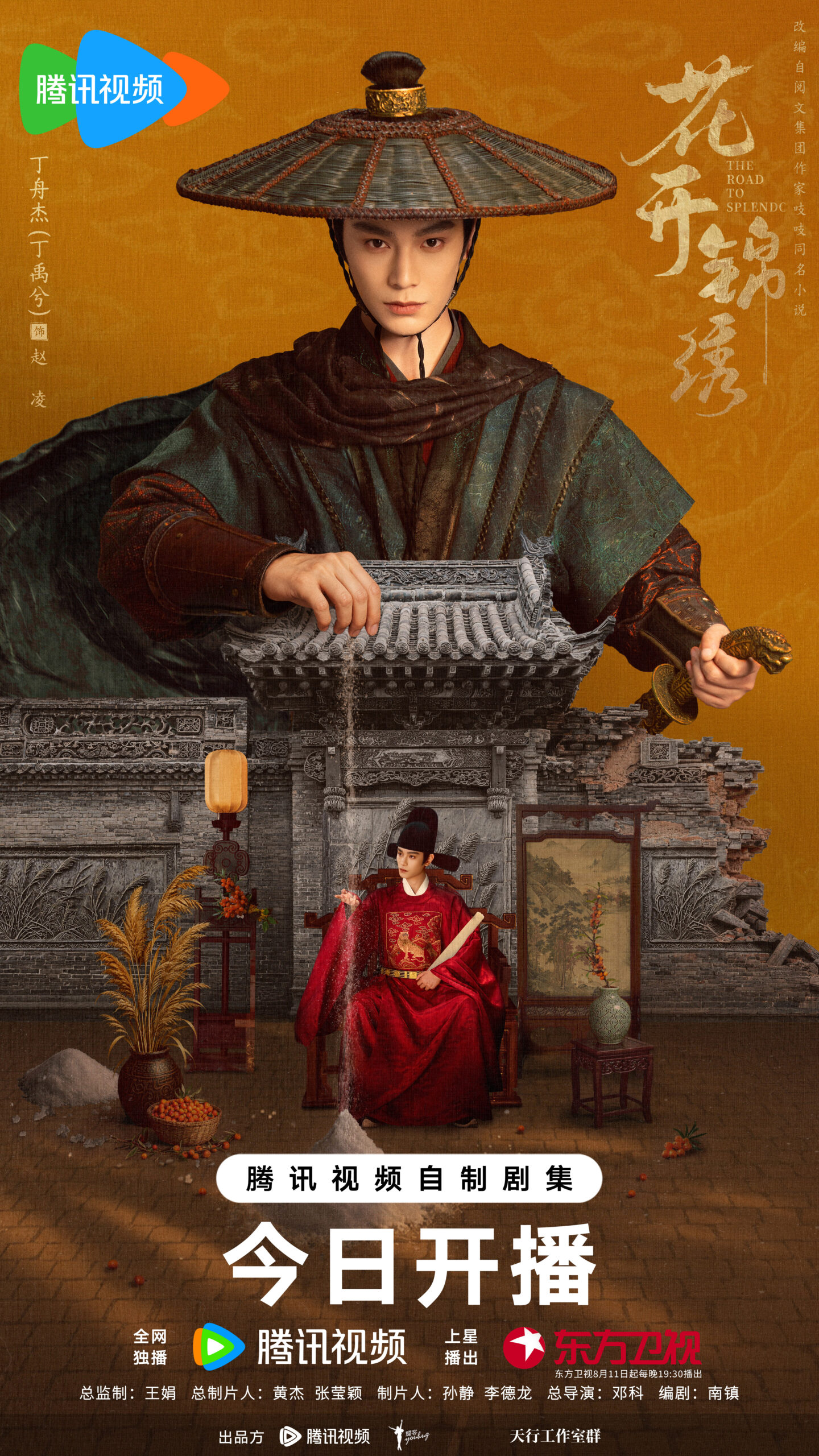
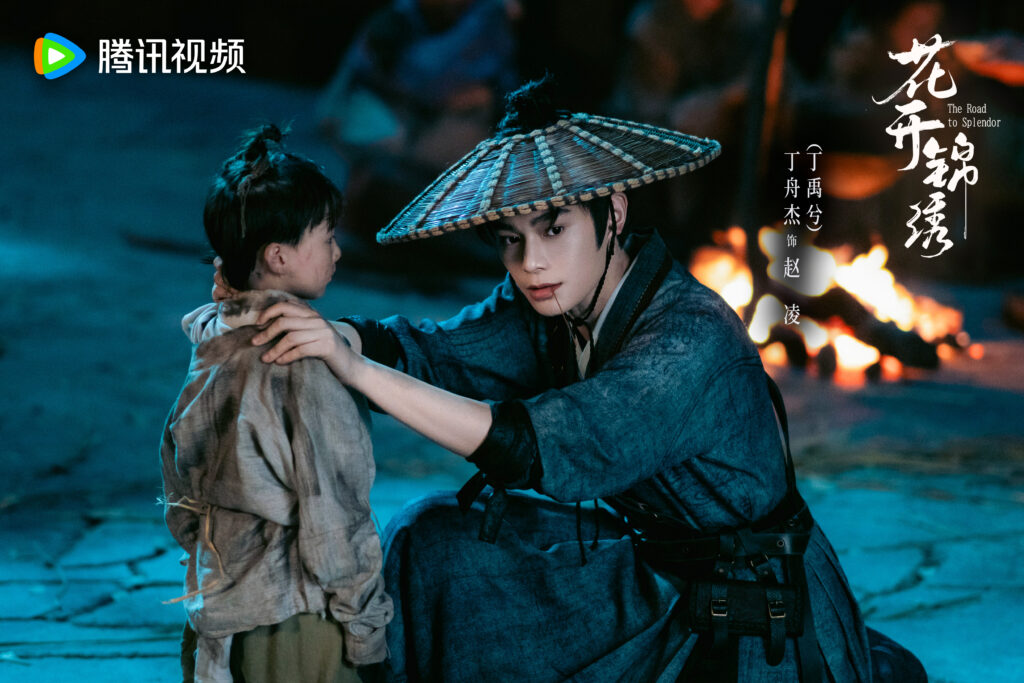
zhao ling 赵凌
ding yu xi 丁禹兮
Salt smuggler
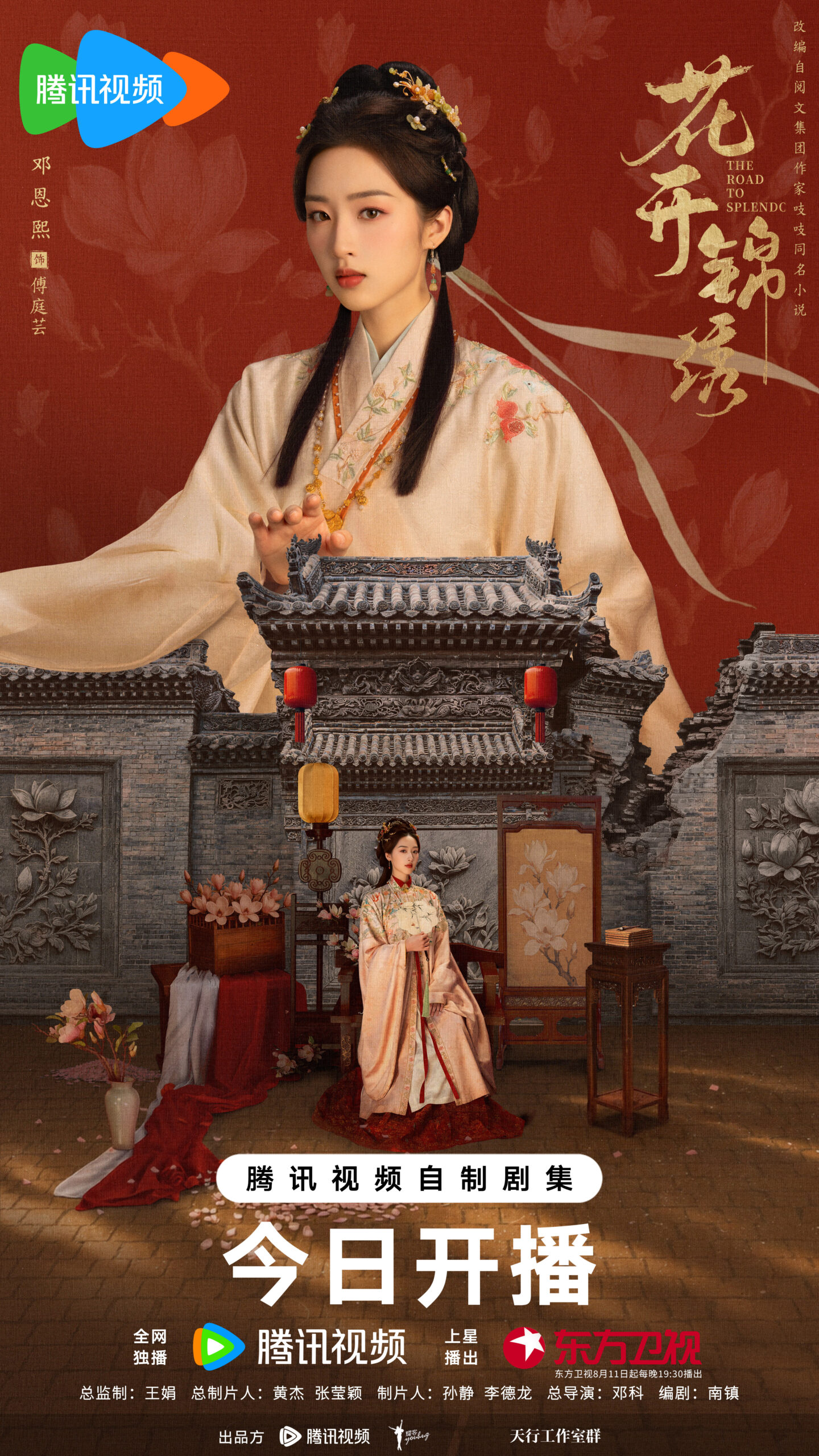
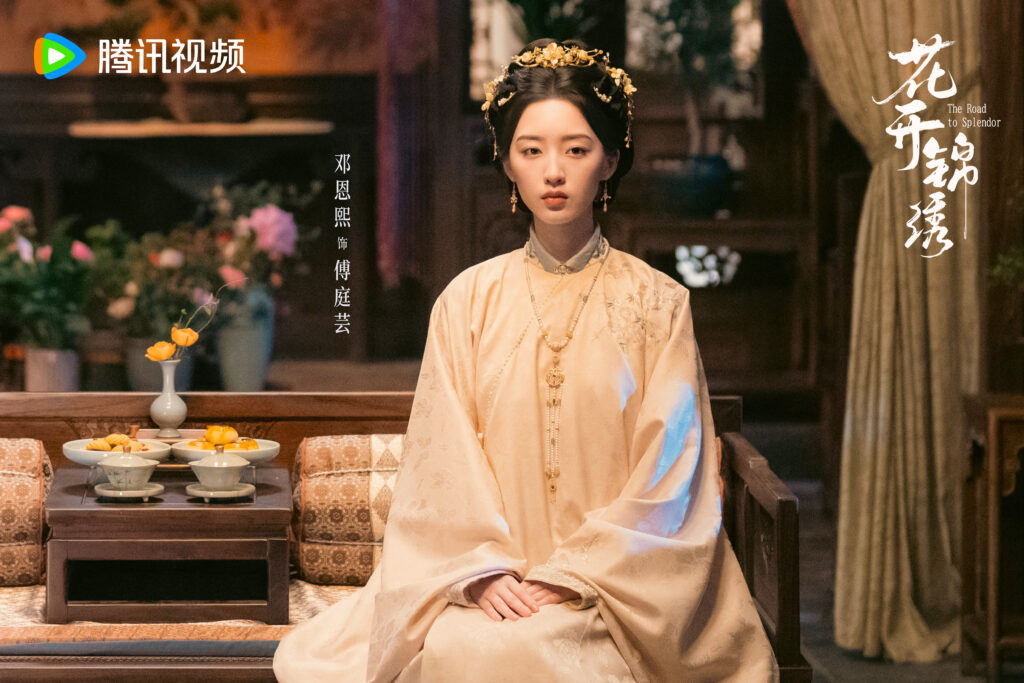
fu ting yun 傅庭芸
deng en xi 邓恩熙
Granddaughter of the Fu family
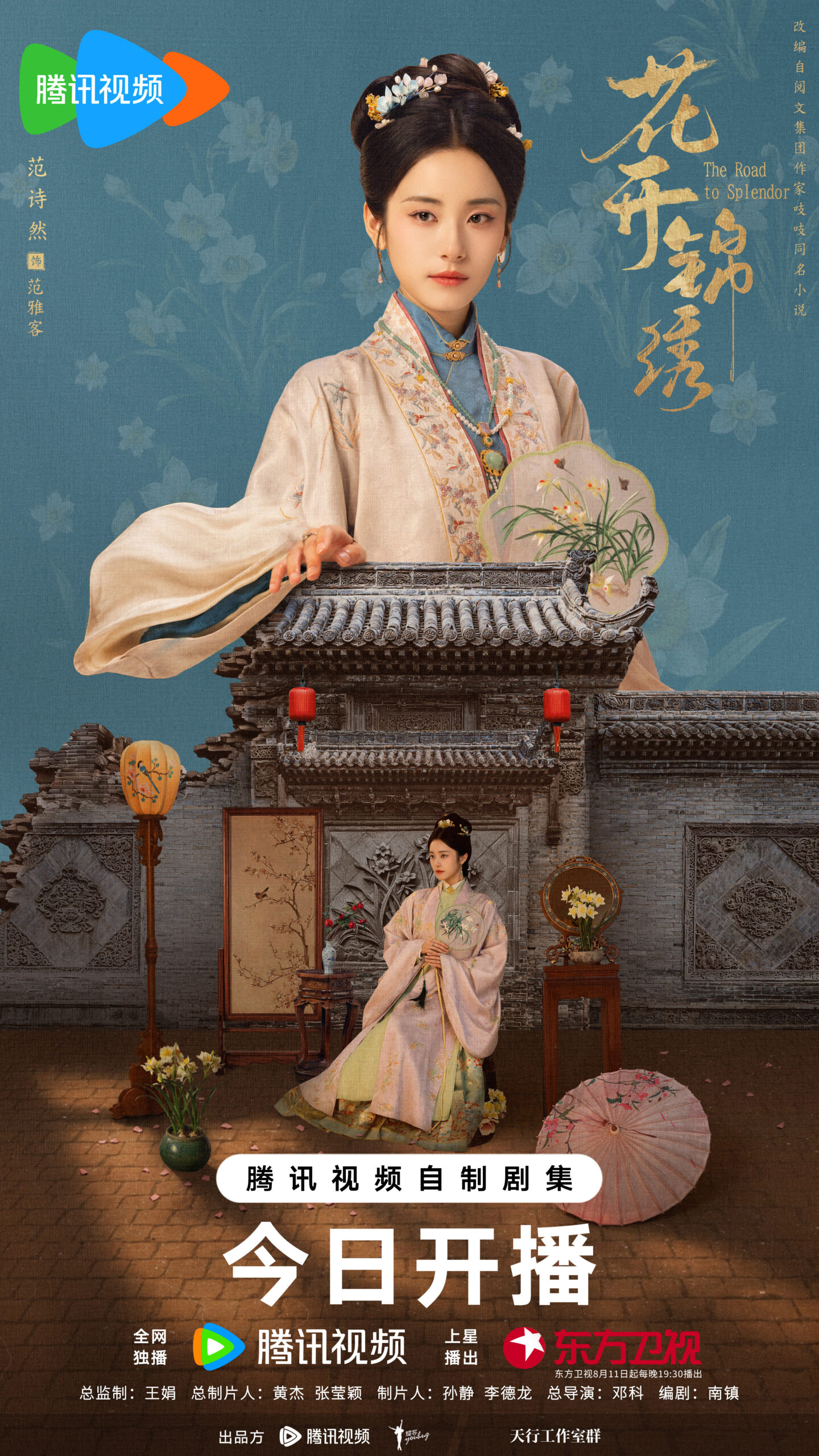
Fan Ya Ke 范雅客
fan shi ran 范诗然
Close Friend of Fu Ting Yun
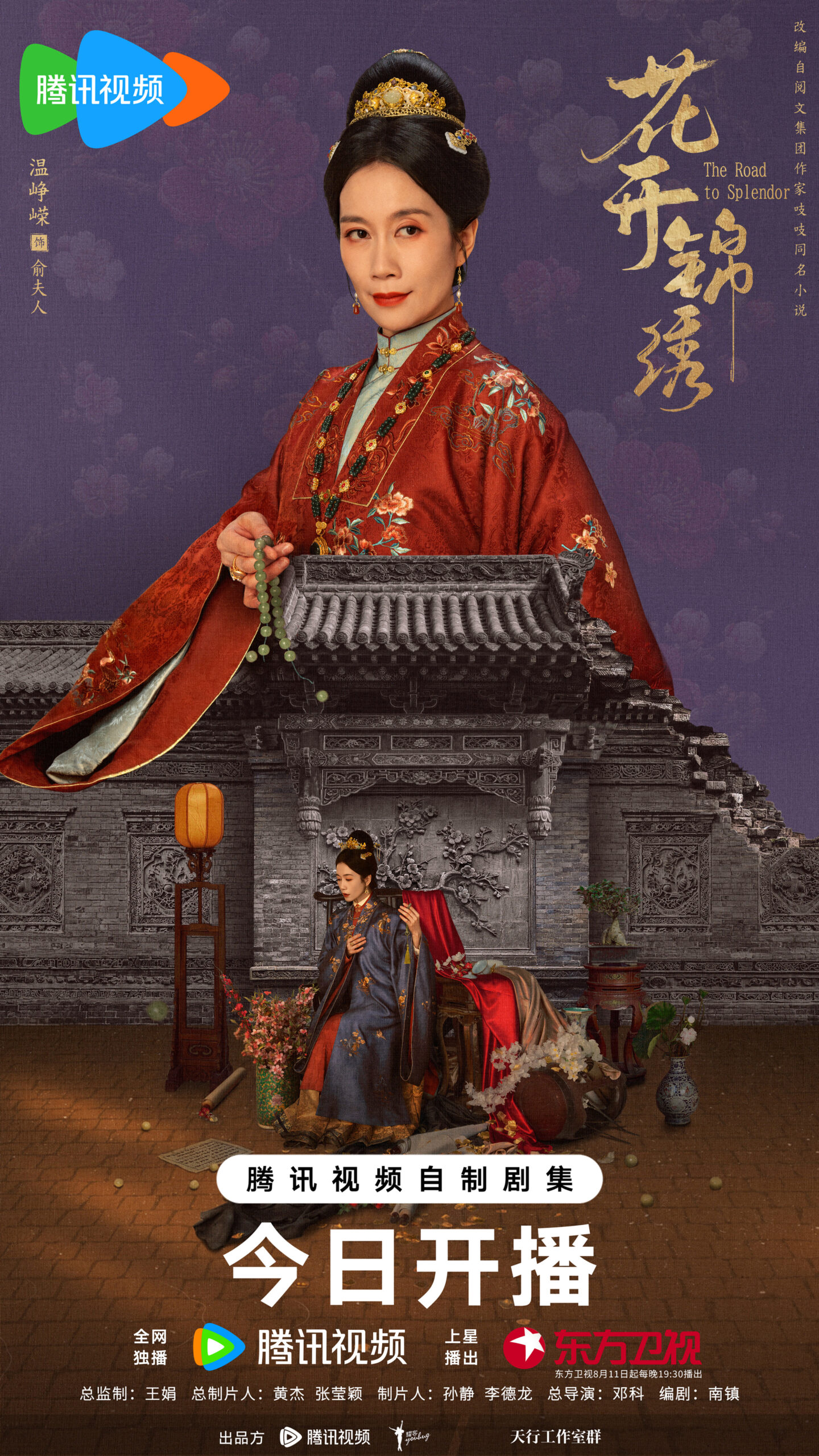
Madam Yu 余夫人
Wen Zheng Rong 温峥嵘
Close friend of Meng Ting Hui

Overall Thoughts
This was definitely my favorite drama this summer, which is a pretty low bar because most of the dramas this summer were very mediocre.
The drama really shined in the overall production and there was much better writing here than in many recent historical dramas. The writing had a lot of depth with nuanced and layered characters, and the cinematography and costumes were stunning.
More importantly, as I watched this show, I wanted to learn more about the culture and history portrayed in this drama. History and culture from historical Chinese dramas were the entire reason why we started Chasing Dramas several years ago and I’m glad I wanted to dive more deeply into what was discussed on screen.
For me, it was very evident that the director put thought and effort into this project.
The director, Deng Ke, has helmed quite a few hits in his career including The Guardian of Da Feng and The Legend of Shen Li. But from an artistry perspective, The Road to Splendor really surprised me because there were many times when I was thinking, “Wow, this scene is stunning.” I do find it funny that the last shot of the entire drama has this blazing “DIRECTOR DENG KE.” It felt like he wanted to show how important he was in putting this project together, and you know what? I do give him a lot of credit.
As for the cast, I actually thought Deng Enxi fared better than Ding Yuxi even though she is about a decade younger. I liked seeing fresh faces on screen as well as actors who are actually emoting rather than phoning it in like we’ve seen in some other recent dramas. There were quite a few emotionally heavy crying scenes, and I thought Deng EnXi did decently well. At the very least, her performance generally didn’t take me out of the story or break my immersion. Unfortunately, Ding YuXi was the weak link for me both in his acting and his character, Zhao Ling.
And as I mentioned in our September drama updates episode, this drama was sadly not the most commercially successful drama this summer. It only breached 27,000 on Tencent’s popularity index which is pretty average. However, this show did get a 7.1 on Douban, which is the highest-rated costume drama this summer and that matches my view of the shows I’ve watched myself. It is a shame because the overall quality was high and I wonder if a more popular male lead would’ve helped make this more commercial.
What I Liked
Strong Writing
1. Providing a framework for (and lack thererof) female agency in a deeply patriarchal society.
One of my biggest gripes with many of the female dominant dramas of late is that they don’t do enough to establish why the female lead is so determined to fight back. There’s usually this vague idea that women are oppressed and that they’re limited to what they can do, and therefore we’re supposed to accept whatever rebellious or aggressive actions the female lead takes to oppose the patriarchy and better her position in life. But often times I’m left wondering why the female lead is so ready to fight and if her actions are justified within the confines of that drama.
The Road to Splendor meanwhile actually first establishes the oppressive and restrictive rules that these women live in, and that is the entire basis for how various women behave in this drama. There’s a clear reason why people do what they do, regardless of whether or not you agree with them.
Take the Fu family. Much of the family’s status rests on their 贞洁牌坊, or Chastity Archway. The men haven’t managed to improve the family’s standing themselves, so ironically, the family’s prestige rests on the supposedly virtuous behavior of its women and they burden of maintaining that reputation.
That’s why Grandma Fu is willing to kill her own granddaughter. Fu Tingyun’s supposed affair didn’t just embarrass the family, they threatened the key foundation of the family’s social standing. In Grandma Fu’s mind, Ting Yun’s death was the only way to save the Fu family.
Fu Tingyun herself said it in one of the most powerful lines. She said that an unmarried woman simply has very few options in this society. She needs a man. The subtext is that it’s not because she’s incapable, but because the society she lives in requires one for her to have security and standing. That’s part of why she’s so invested in Zhao Ling’s career and why she ultimately chooses to marry him. Fu Tingyun understands the rules of the game. She’s trying to accumulate whatever leverage she can within a system where she has very few cards to play. And that’s what gives her ambition more depth for me. She’s not fighting against society simply because the script wants a “strong female lead” and that she was wronged in a former life. She’s trying to create as much freedom for herself as she can within the boundaries of the world she actually lives in.
2. Nuanced and layered characters
In this world, there are very few characters in this drama that are simply good or bad. And importantly, understanding why someone behaves a certain way doesn’t mean the drama asks us to excuse what they do.
Extending what I discussed earlier, Grandma Fu raised Fu Tingyun well and taught her many of the skills she later uses to manage a household. But the moment Fu Tingyun threatens the prosperity and reputation of the Fu family? Grandma Fu doesn’t hesitate to order her death. The widow, Madam Zuo was vicious towards Fu Tingyun, but when her own maid attracts the advances of her loathsome lover, she immediately steps in to protect the maid. She understands exactly what could happen to this young woman if the man succeeded and doesn’t want that fate for her. Yu Jingxiu, the second male lead, often behaves like a petulant child who seems determined to oppose his mother simply for the sake of opposing her. But then you hear some of the incredibly cutting things she says to him about controlling every aspect of his life, suddenly, some of that resentment becomes a lot more understandable.
There are plenty of characters I haven’t raised but I feel like we could do a deep dive analysis on each of them to better understand their motivations. The fact that I wanted to do that? Means these characters were written well.
3. The scheming and strategy are actually intelligent—both in the household and at court
In The Road to Splendor, you clearly saw who was intelligent and observant and who was not.
Here, I must raise Madam Yu. You can tell she is quite the impressive adversary. She didn’t miss a beat and immediately saw how Fu Ting Yun shared wealth amongst other women for the opening ritual to ensure her safety. She also immediately understood Fan Yake’s ambitions toward her son simply from seeing the flowers in his room.
Fortunately, Fu Tingyun can actually keep up with her and I guess that is what makes her the female lead. It is what made watching Madam Yu and Fu Tingyun battle through various rounds so much fun. They’re evenly matched, and because the drama establishes what intelligent maneuvering actually looks like, it also becomes painfully obvious when other characters aren’t playing at the same level. There are soo many examples throughout the drama where Fan Ya Ke and Yu Jing Xiu are behaving on literally 2 or 3 levels below Madame Yu and Fu Ting Yun that at some point you even feel bad for Madame Yu for having to care/plan for her son and daughter-in-law that just drag her down.
I actually loved reading so many comments on Chinese social media that were like – Ting Yun should’ve married Madam Yu and that family would have been unstoppable. Hahahahaha.
This type of “fighting” so to speak extended also at court. Once Zhao Ling and the others reach the capital, we see the reality of the saying 伴君如伴虎—serving the emperor is like keeping company with a tiger. And despite my not liking the court episodes as much, I liked seeing how dangerous and fickle the Emperor could be. One wrong move, or even one perceived act of disloyalty, can have horrific consequences. And that does happen. The Empress Dowager says one pointed thing and the Emperor becomes annoyed and doesn’t send any gift to Zhao Ling. People notice, but Zhao Ling and Ting Yun don’t understand what happened until someone points it out to them later.
So for this show, you have Zhao Ling battling every day with various court ministers and the Emperor to survive while Ting Yun is fighting with the household politics in challenges that actually made sense.
4. Dialogue with real cultural depth
For those of you that have listened to Chasing Dramas when we were just a podcast, you know that we started the podcast by analyzing poems, idioms, historical allusions etc portrayed in historical Chinese dramas to learn about Chinese culture and history. In the Road to Splendor, I finally felt like I wanted to dive into the history that was discussed or portrayed because there was actually depth.
From the get go, we hear about Yu Jing Xiu being moved to the East Room when visiting the Fu family. He was later on moved from East and West rooms depending on what Madam Yu thought about marrying Ting Yun to him. There’s real significance to what that means but it wasn’t explicitly stated. This is tied to the idiom (东床快婿).
When Fan Ya Ke’s father asked her about a question Yu Jing Xiu posed, Fan Ya Ke brought up the story of Empress Dowager Lv, Han Emperor Han Hui Di and Empress Zhang Yan. There’s a whole story there about that tragic pairing beyond what Fan Ya Ke raised in those 2 sentences but she brought it up to make her point.
And here, episode 2, Madam Yu says the lines 独自芬芳不自媒. It speaks of a flower blossoming on her own and not seeking her own marriage which obviously refers to Fan Ya Ke at this point because Madam Yu could tell Fan Ya Ke had ambitions to marry her son.
All of these lines were subtle or more poetic ways to make certain points to move the plot along. But with history and culture embedded into it. Given how much my co-host Cathy and I like analyzing Chinese culture and history from these dramas, this definitely tickled that itch which for me is always a win.
High production value
1. Beautiful cinematography
I particularly liked the very first scene in the drama and one that is revisited in episode 5. Fu Ting Yun’s funeral procession with her family all dressed in white is sending her off while Zhao Ling brings a wedding procession with the real Fu Ting Yun in the bridal sedan chair. The two processions cross paths as away to signal that Fu Ting Yun has died while Xie Ting Yun now has a new chance at life. It was quite a symbolic scene and beautifully shot.
And, there are many scenes in the first 4-5 episodes where the Chastity Memorial Arch is front and center of the shot. This one in particular of the miniatures serve as a block or even a prison for Lady Zuo. Which again, is symbolic for what these arches mean for the women of the Fu family. I thought how the shot was filmed was quite clever and added depth to this show.
Lastly, many of the scenes in this drama, particularly from episodes 10-17 when the group was in Gan Lin Town was shot on location. Gan Lin Town was filmed in Dun Huang and it absolutely elevated the look and feel of the show. The stunning vistas of the desert gave weight to the dry and harsh conditions they were in. But there were also beautiful 胡杨林 or Desert Poplar trees added to the mix. There’s finally some diversity away from the familiar film locations in Heng Dian here.
Costumes/Hairstyle
This year funnily enough, my favorite dramas were all Ming Dynasty inspired. The Road to Splendor exudes quality not only from the cinematography, but also the costumes and hairstyles. The jewelry, embroidery and hairstyles all elevated the show. Women’s hairstyles of that time period were also different depending on whether or not you were married and that was pointed out multiple times in the show as well. So it wasn’t only just what looked good on screen, but there were historical ties as well.
What Were the Weak Links
Ding Yu Xi and Zhao Ling – Unfortunately, Ding Yu Xi’s acting didn’t have as much depth or didn’t have as much to do as female lead Deng En Xi. Zhao Ling as a character was also just not as interesting as Fu Ting Yun.
From an acting perspective, the director tried to give him a badass introduction and again the way this scene was shot was very beautiful, but he just doesn’t command as much gravitas as I would like. He is also the actor who 让我出戏 or makes me break immersion the most in this show. It’s obvious that I’m actually watching 丁禹兮 rather than Zhao Ling. And. when Ding Yu Xi popped up, I kept getting distracted by him on screen. Like why is his neck always extended so far forward. And why does he always have his mouth agape even when he’s not speaking. And why are his lips so dark red? What’s the shade of his lipstick? He really needs to work on his posture. These are definitely NOT questions I should be asking when watching this show.
And while I think Deng En Xi could’ve had more spark in her acting, she really impressed me with many of her crying scenes, especially when she was going to be killed by her grandmother. Ding Yu Xi never gave me that much emotion, even in devastating moments in his life. He was fine, just not show stopping.
As for Zhao Ling, he has a heart of gold, respects women’s boundaries and is clearly very capable. But his storyline just feels a lot more flat. For the most part, Ting Yun was pushing him to better himself and acting as his 军师 or advisor while he just listens. He would’ve been totally happy to stay a salt smuggler his entire life if he didn’t save Fu Ting Yun. Later on, he is also the source of a lot of miscommunication between himself and Ting Yun which was quite frustrating as well.
The beginning of the show and the post Gan Lin stretch
For me, the drama was most intriguing from episodes 5-18 when Ting Yun gets a second chance at life away from the Fu family and when she and Zhao Ling were in Gan Lin Zhen. The first 4 episodes felt a little overwhelming with just how much information was crammed in that, to be honest, was not fully explained. The story became a lot more streamlined and interesting once Ting Yun and Zhao Ling started working together with the Crown Prince on salt related matters and then making a life in Gan Lin Town. That’s when the drama was an easy binge as life was challenging but quite sweet.
Once everyone heads to the capital, though, the tone changes considerably. The court politics become more prominent, there’s more miscommunication between Zhao Ling and Ting Yun, and there’s this constant oppressive feeling hanging over everybody because of the Emperor and the various political factions.
Now, there were a few new interesting characters and plot points. I just didn’t enjoy the heavier tone, the repeated misunderstandings and the constant sense of impending heartbreak nearly as much as I enjoyed watching Zhao Ling and Fu Tingyun working together and building their life in Ganlin Town.
There were definitely moments in the second half where I was sitting there thinking: JUST. TALK. TO. EACH. OTHER.
I understand why some of the misunderstandings happen. I understand the political pressures Zhao Ling is under and why he can’t always tell Fu Tingyun everything. I just found that portion of the story considerably less compelling. I was watching on 1.5x speed heading into the ending to get through a lot of the stuff I didn’t want to watch.
I can only get the first two episodes on Youtube 10cent; other listings were for different dramas. Why do they do this? Frustrating.
Please do a deep dive analysis!!! I really enjoyed the plot and all the calculations among the ladies. The double entendres spoken (especially by Madam Yu) during the ladies’ gatherings were so fun to watch. It reminded me of Empresses in the Palace.
I loved the side characters and learning about the reasons behind their behaviour. I would have loved to know more about the historical context as well. I didn’t understand the part about the East and West Rooms until you explained it to me.
The Chastity Arch thing was another eye-opening aspect. I had to Google it to learn more about these oppressive architectural practices that ruined the lives of so many women. I didn’t even know such things existed before watching this drama. Also the one where the female’s lead father did the filial piety thing leaving Gandma Fu’s coffin in the capital? Didn’t know that it’s a thing too.
And yes, Ding Yu Xi thick makeup was too much. At certain point I felt that his makeup was even thicker than the female lead. He’s suppose to be a ruffian for god’s sake. What a pity.