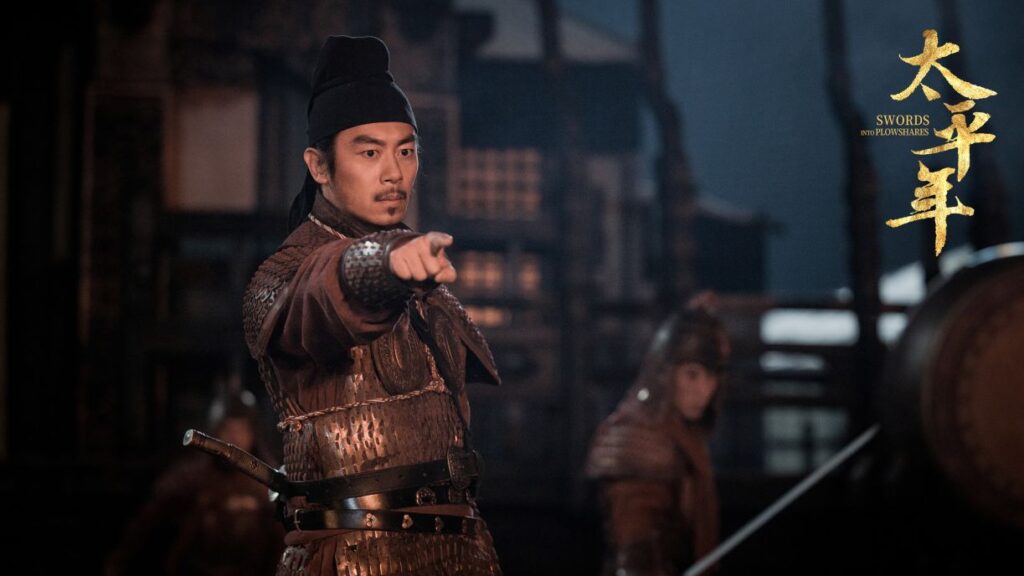
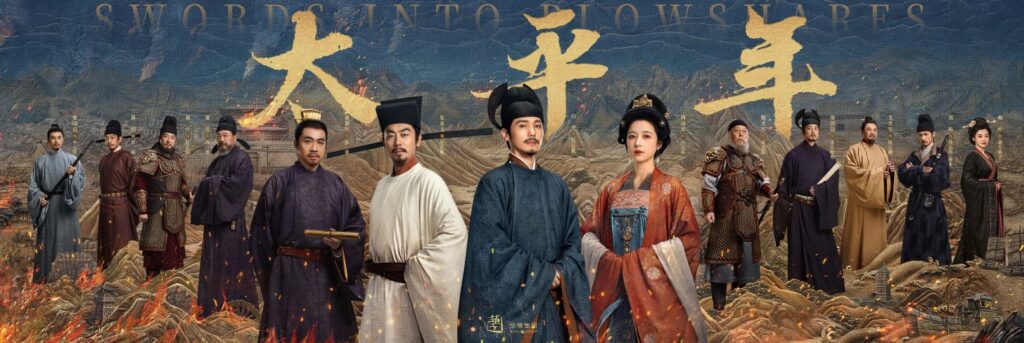
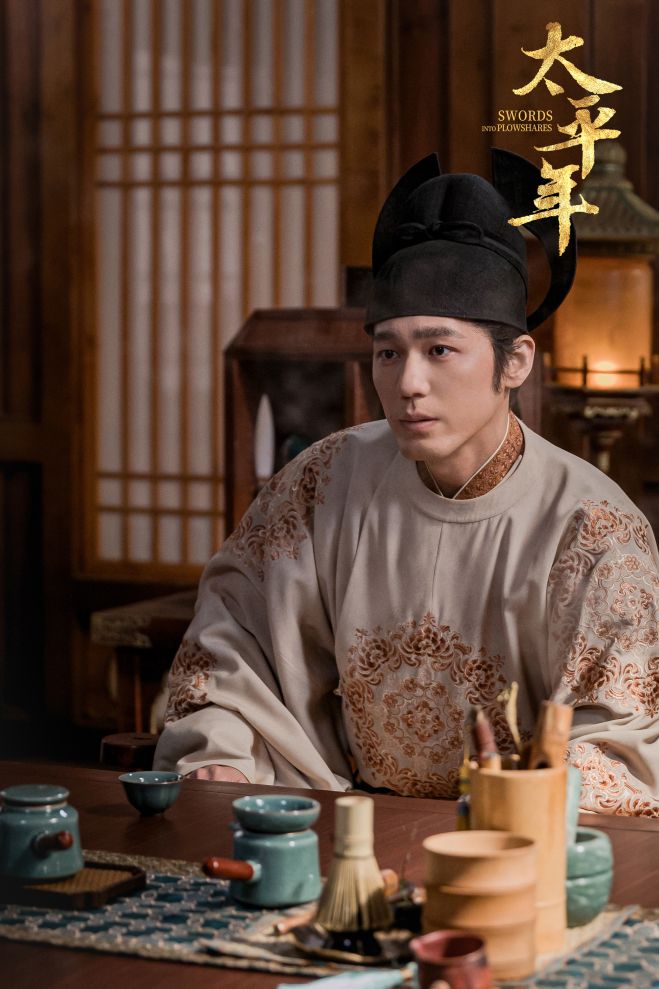
Currently Watching: Swords into Plowshares (2026) 太平年
Summary: Set in the VERY bloody Five Dynasties and Ten Kingdoms period of 941AD, the 9th prince of the Wu Yue Kingdom, Qian Hong Chu ft Bai Yu as a young boy, is protected by his loving father and brothers. During this tumultuous time in history after the fall of the Tang dynasty, the Wu Yue kingdom, was quite a wealthy and peaceful place. On a trip to the mainland however, Qian Hong Chu sees just how bloody and ravaged the rest of China was. There, he meets Guo Rong ft Yu Hao Ming, future Emperor of the Zhou dynasty and Zhao Kuang Yin ft Zhu Ya Wen, future Emperor of the Song Dynasty as young men. At the time, they were all soldiers or officials for the Jin empire and were figuring out how to fight against the impending QiDan (Khitan) Empire.
Platform: CCTV8, Tencent, IQiyi
Episodes: 48
Airing Date: Jan 26, 2026
Warnings – GRAPHIC deaths, cannibalism depictions, and beheadings.
Initial rating (after 30 episodes): 8.5/10: A dense, brutally honest historical drama that prioritizes politics, warfare, and statecraft over romance. Outstanding acting, meticulous attention to history, and jaw-dropping set pieces make it deeply immersive and intellectually rewarding, though the romance subplot occasionally disrupts pacing. Highly recommended for viewers who enjoy serious, dialogue-heavy dramas and don’t mind a steep historical learning curve.
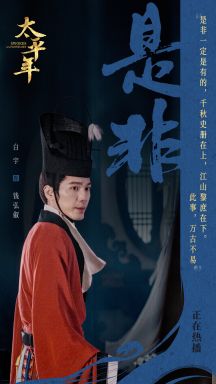
qian hong chu 钱弘俶 bai yu 白宇
9th prince, King Of Wu Yue
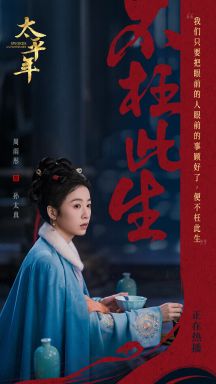
Sun Tai Zhen 宋太真 Zhou Yu Tong 周雨彤
Queen of Wu Yue
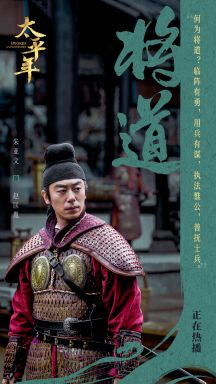
zhao kuang yin 赵匡胤 zhu ya wen 朱亚文
Eventual 1st Emperor of the Song dynasty
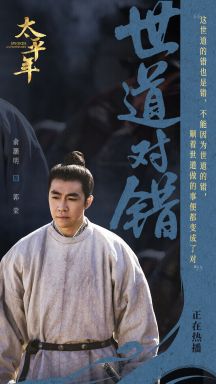
Guo Rong 郭荣 Yu Hao Ming 俞灏明
Eventual Emperor of the Zhou Dynasty
Plot Overview
In 941AD, the Wu Yue king dies and the young 6th prince ascends the throne. Several years later, 9th prince and younger brother of the now king of Wu Yue, requests to be a diplomat to Bian Liang, the capital of the Jin dynasty where Wu Yue is a vassal kingdom. However, just as the Wu Yue delegation arrives, the Qi Dan army and defectors from the Jin kingdom march towards the capital. There are bodies and white bones everywhere with hordes of misplaced civilians hoping to seek shelter in the capital of Bian Liang. It is on this trip, Qian Hong Chu sees the collapse of an empire and the demise of human nature as death and despair cripple the capital. But he meets Guo Rong and Zhao Kuang Yin, young men who balance rights from wrongs in order to strive for a peaceful age.
Qian Hong Chu returns to Wu Yue where he must manage further skirmishes in the south, and corruption in other counties. With the death of his 6th brother and a coup against his 7th brother, he ultimately ascends the throne as king of Wu Yue. Years later, when Zhao Kuang Yin ascends the throne to lead the Song dynasty, these former friends work together to bring about a peaceful, united age for the Song dynasty.
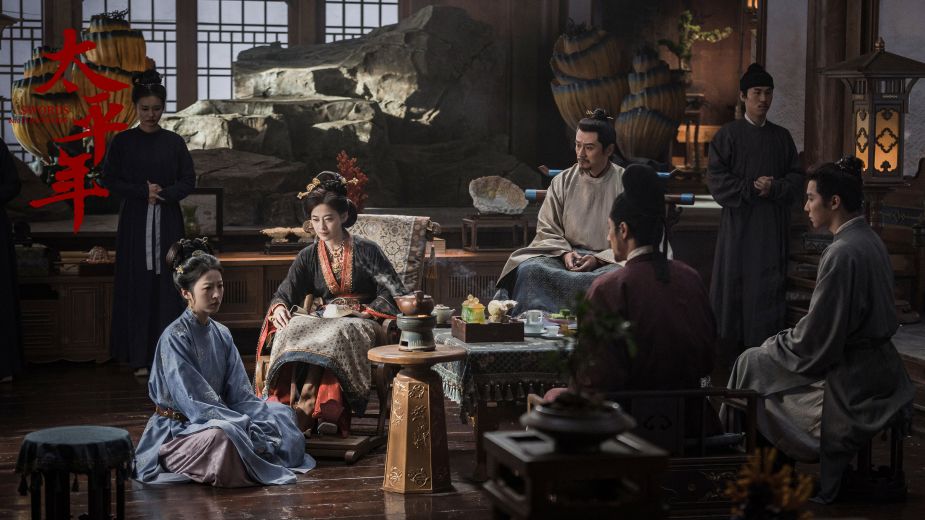
Initial Thoughts
This is a SUPER bloody but also SUPER history heavy drama. I’m not too much of a fan of the blood (I’m definitely a chicken on that front) but the drama is absolutely captivating on a culture, history and story front.
The Five Dynasties and Ten Kingdoms era is sandwiched between the Tang dynasty and the Song dynasty. There have been a few dramas over the last decades that use this time period as a backdrop but not too many because 1) it’s quite confusing to keep track of and 2) it’s an incredibly chaotic and bloody time in history.
Literally in the 1st 20 minutes, we see how General Zhang Yan Ze kills humans to make into food for his army. It is stunningly grotesque but what’s worse is that this is actually what happened in history. Be warned about this type of violence throughout (though it’s not constant).
Instead, this drama follows 2 main story threads – what happens in the Wu Yue kingdom that is quite wealthy, vs what happens in the mainland capital of Bian Liang where it is poor and destitute. This is an era where generals with military might call the shots and is a time where mainland China was humiliated by the invasion of the QiDan or KhiTan people from the north. They were given the 16 prefectures of Yan Yun which includes modern day Beijing and was a stain on Chinese history. (This is what was stated in the drama).
This drama is top notch in acting, costumes, history. It’s such a pleasure to watch such high quality content where you get to learn about something new. There’s spots of romance for the main lead but that is limited enough vs the bigger tasks at hand of how to save the land and bring peace.
I’ve never really seen in Chinese dramas how a coup actually happens. We see it happen multiple times in this drama. Within 10 years, multiple Emperors were brought to the throne and died and multiple dynasties took over. Some wanted the power, others were thrust onto the position. All interesting food for thought as I watch this show.
This drama is doing only OK. It’s at the top of the charts but not astounding by any means from actual viewership metrics either on TV or online. Still, it has caused many people to start reading up on history and encourages people to actually pay attention in an age where we all have increasingly short attention spans.
Watch this show if you’re interested in history!
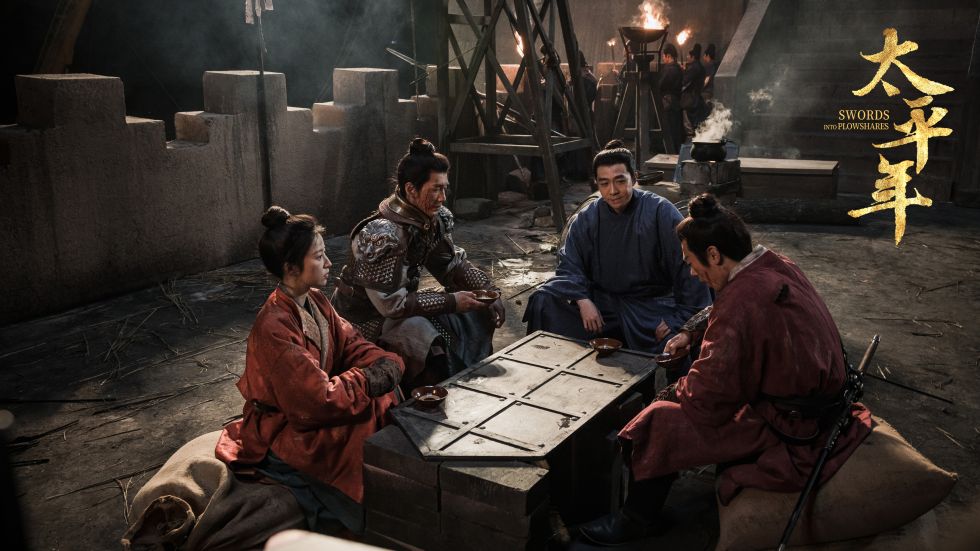
What I Like
Fantastic Acting/Enunciation: Let us rejoice in the fact that this is NOT an idol drama by any means. Bai Yu is quite handsome and the rest of the cast is known enough, but they were NOT cast for their looks. Instead, they were cast for the acting abilities and how well they fit the role. The main male cast is exceptional in their roles and I particularly like Zhu Ya Wen’s Zhao Kuang Yin. He has a deep, rugged voice that befits a general and he is quite captivating on screen especially in his armor.
But this show really challenges actors because of the complexity of the dialogue. There’s tons of ancient text and poetry that is recited. Even the simple announcement of Qian Hong Chu’s title is enough to cause confusion on just how much needs to be memorized. But here, almost everyone is using their actual voices for dubbing and each word is enunciated properly and cleanly. THIS is what it means to have good actors. You can understand every word they’re saying and the pauses and inflections add intention to each sentence.
What’s most powerful is that the acting skill level extends beyond the main cast. The various government officials and generals that maybe only show up for a few scenes are all outstanding in their enunciation, their gravitas and presence. Even eunuchs who are killed in an instant are able to have a highlighted moment because they’re able to meet expectation of that scene. It is SUCH a pleasure to watch these seasoned actors (many of them old actors) just go at it and bring about their best work.
Jaw Dropping set pieces: From Baike, the set pieces for the drama took about a year to build and complete while the crew also went to Dun Huang to film for certain real life scenes with the goal of showing the sandy, destitute lands at the time. I think this added a ton of depth and immersion to the show since it wanted to contrast how ravaged and weakened that part of China (modern day He Nan) was given decades of warfare.
I was absolutely stunned at the massive Khitan army marching its way towards Bian Liang because the drama actually shows rows and rows of foot soldiers and cavalry in clean/tight formations. That 压迫感 or immense pressure shown on screen gives us a flavor of what it was like for Zhao Kuang Yin and his men trying to defend the Capital with little to no resources. It felt like I was watching Lord of the Rings with the armies depicted in those movies.
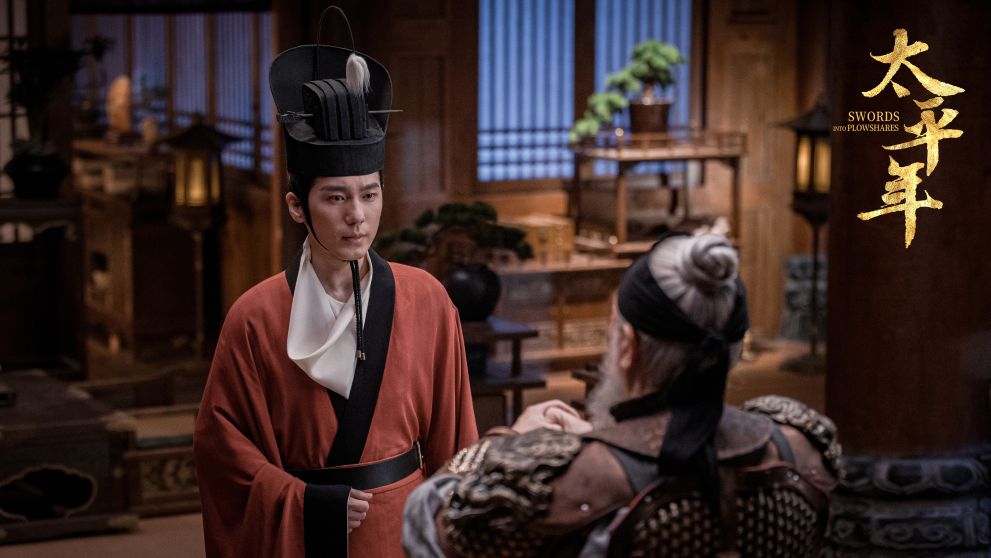
Adherence to history: It is abundantly clear that this drama spent a load of time thinking through the script as well as costumes to bring about a world as close to this time period as possible. Throughout the show, there are little notes on the side that explain what a character is saying to give more context. For example, the main lead could say something like “back when we were studying with XYZ”, there will be a side note that says “XYZ was a key scholar during the WuYue period” or something like that. These little nuggets are scattered throughout the show. Was it necessary? Absolutely not, but I appreciate the time and effort it took to put all of that together in the script so that we can get a sense of what people were discussing at that time period.
From a costumes perspective, the armor for the various men are intricate and the government robes and caps also thoughtful. I feel like even in the Story of Ming Lan, it wasn’t abundantly clear what the different colored robes meant for different ranks but here, it is much clearer in that the guys in purple are uber important. (That helps give more context to why Gu Ting Ye is such a badass with his robes). On the ladies side, even though various characters show up for a scene or two at most besides the female lead’s family, their hairstyles and costumes also all have real life historical counterparts which is quite welcomed.
Uniquely memorable side characters: There are hundreds of characters in this show. Sure, some show up for literally 5 seconds but then for anyone with some knowledge of Chinese history, it’s like “HEY! I KNOW THAT GUY” because that dude will likely be a big deal in the Song dynasty later on. Or, it’ll be like “HEY THAT DUDE WROTE THAT POEM”. It’s kind of fun to parse this out and then obviously I’m going on social media or going down the Baike rabbit hole to figure out what is true and what is just dramatized for this show.
But, what I’ve thoroughly enjoyed are the side characters. Feng Dao in Bian Liang, this senior advisor who worked with 5+ emperors and even changed the will of an Emperor to avoid a bloody fight, was such a badass because he basically scared off the Khitan Emperor by explaining how much food and money it costs to run a kingdom, not just conquer it. Old man Hu Si Jin is freaking 90 years old but still has the work ethic, intellect and ambition that puts even 20/30 y/olds to shame. His dialogue with his 60 y.o son has me cracking up most of the time because his son is like “I’m old” and 90 y/o Hu Jin Si is like “weak sauce!”
Shui Qiu ft Bao Jian Feng is a trusted advisor to Qian Hong Chu and a strong mentor of his. Same with so many other people Qian Hong Chu meets along the way as well as his own brothers . The show somehow managed to go through many plot points and themes but keeps us connected to, at least, key figures. And while we may hate what certain individuals did, we understand their rationale. Or, just know that they were idiots.
What Is Suffering
Romance
I recognize that this drama will not be everyone’s cup of tea. Maybe there’s too much dialogue and time skips but that doesn’t mean it’s not a top quality show.
What DID detract from the show is Zhou Yu Tong’s character, Sun Tai Zhen. Many people online do not like Zhou Yu Tong for her behavior on Season 6’s Diva’s Hit The Road. I didn’t watch that so can’t comment. I personally don’t think there’s anything wrong with her in this role. The problem is that the character of Sun Tai Zhen didn’t need to be many of the scenes she WAS in. Most of the other women in the show that were married to various characters showed up in brief capacities which was effective enough since the true story is about the men.
Sun Tai Zhen in history was highly respected by her husband and, from what I’m reading, well loved. But she seemed quite out of place as a character in especially the first part of the show. Both she and Qian Hong Chu mellowed out later on and she became understandably much more mature after they survived the ordeal in Bian Jing. But for her to even be there, the pace just felt off when it was the 2 of them.
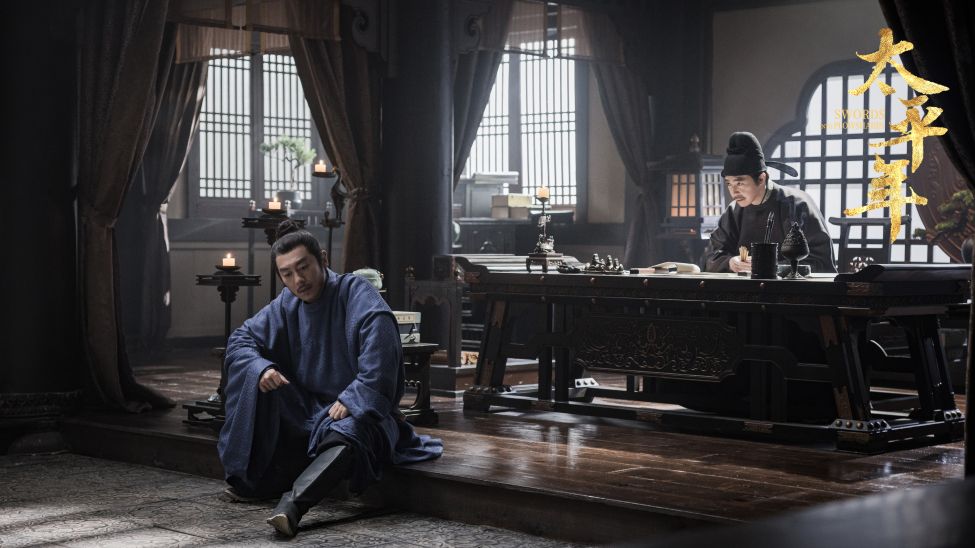
History lesson
We won’t cover this drama episode by episode on our podcast since that might honestly kill me. There is SO much to cover in this show. BUT, I think there are some really fun nuggets.
In China, there is a 百家姓 or Hundred Family Surnames which is a classic Chinese text that names common/classic last names in China. This was put together during the Song dynasty. The first 4 names are 赵钱孙李 Zhao Qian Sun Li.
Guess which name is number one? Zhao – because the Song dynasty was ruled by the Zhao family. Who is second? Qian. For Qian Hong Chu (main male lead) and King of Wu Yue. In history, it is Qian Hong Chu, later Qian Chu, who ultimately decided to give up the vassal kingdom and become part of the Song dynasty in an effort to bring peace to the land. We see just how highly the Zhao family thought of this act.
Sun is for Qian Hong Chu’s wife, Sun Tai Zhen (female lead of the drama) and Li is for the Nan Tang Li kingdom.
For me, this is like “OH! Lightbulb” because I’ve read through this text but never understood why these 4 names were first when by population size, other last names were much larger.
I’m also reading that the Qian family descended from Qian Hong Chu is still insanely connected and well respected. Qian decedents have earned Nobel prizes in modern day and were important contributors to math and science in China in the 20th century. Historical architecture like key towers built during this time period still exist in HangZhou today and there are certain artifacts from the Qian family that have passed down through the generations.
I’m reading that the Zhe Jiang government invested to help with put this drama together, which makes sense since there is a heavy bent to show how great this land was. But hey, me as a history geek, I’m having a blast learning all of this stuff.
But also, lamenting just how bloody and inhumane this time in history was. The key phrase repeated over and over in the drama is 礼崩乐坏 or Li Beng Yue Huai which has its origins from the Analects. It depicts an era where all decorum, music and essentially society has lost structure. It speaks of a lawless time. In this drama, we see just how hard it is to “unite” a kingdom and for once, seeing when an Emperor doesn’t even want the throne in Guo Wei. That was quite refreshing.
Let me know your thoughts!
Karen