

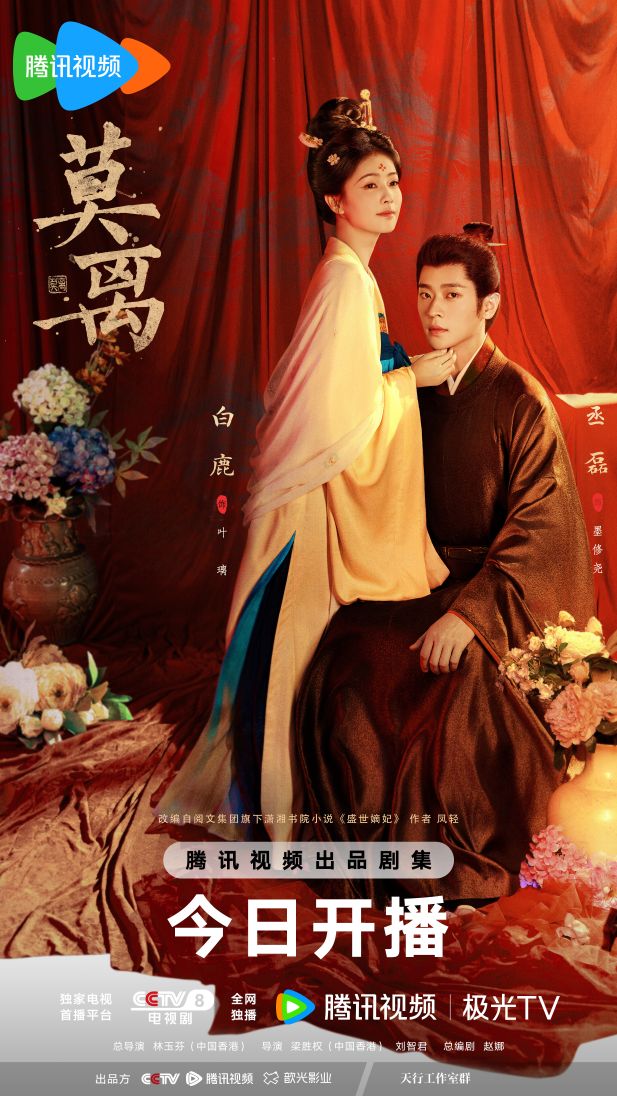
Review: First Jasmine (2026) 莫离
Summary: Ye Li ft Bai Lu marries into the fallen household of the Prince of Ding. specifically the Prince of Ding himself, Mo Xiu Yao, ft Cheng Lei, who has lost the use of both legs. Ye Li, as a descendant of the Li Shan Clan, was once sealed away in the mountains for eight years. After her wedding, she appears unremarkable on the surface but underneath, she is methodically planning her revenge against the court officials responsible for harming members of the Li Shan clan. Her actions draw the suspicion of her husband Mo Xiu Yao, who is also pursuing his own path of vengeance. Meanwhile, Ye Li’s childhood sweetheart, the Prince of Li, secretly plots in the shadows to usurp the crown. Ye Li and Mo Xiu Yao eventually join forces to help the young Emperor take power and restore peace to the land.
Platform: CCTV8, Tencent
Episodes: 40
Airing Date: June 9, 2026
Warnings – Mild violence, bloody scenes
Rating: 7/10 – A slow burn drama about a severely traumatized couple. It has a decently intriguing plot and believable chemistry from the main cast but it requires patience to watch and may not suit fans more accustomed to fast paced dramas.
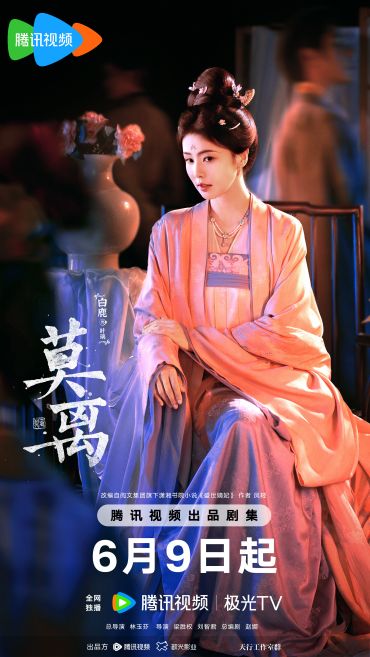
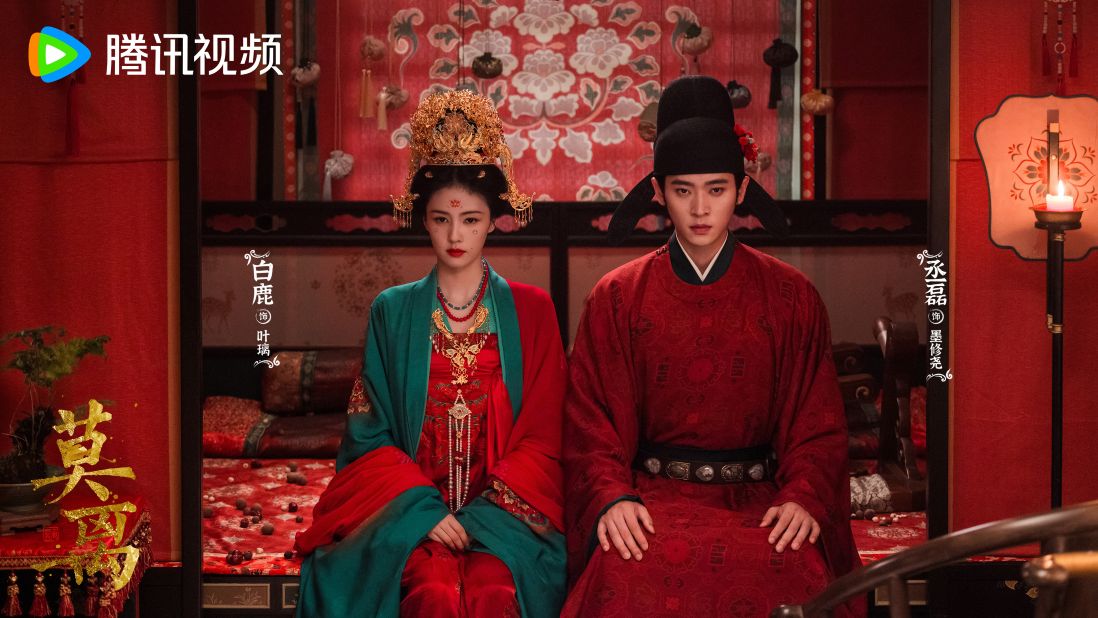
Ye Li 叶璃 Bai Lu 白鹿
Daughter of the Ye Family, member of the Li Shan Academy
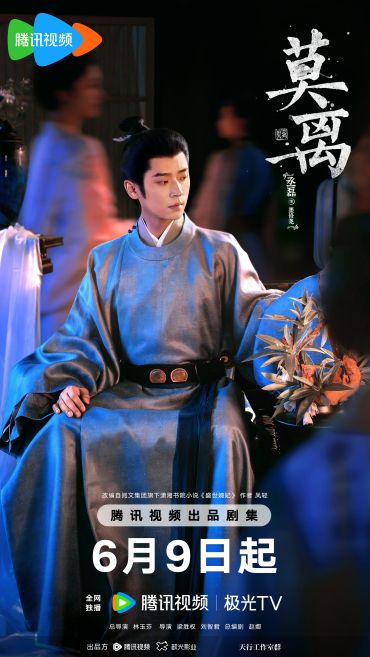
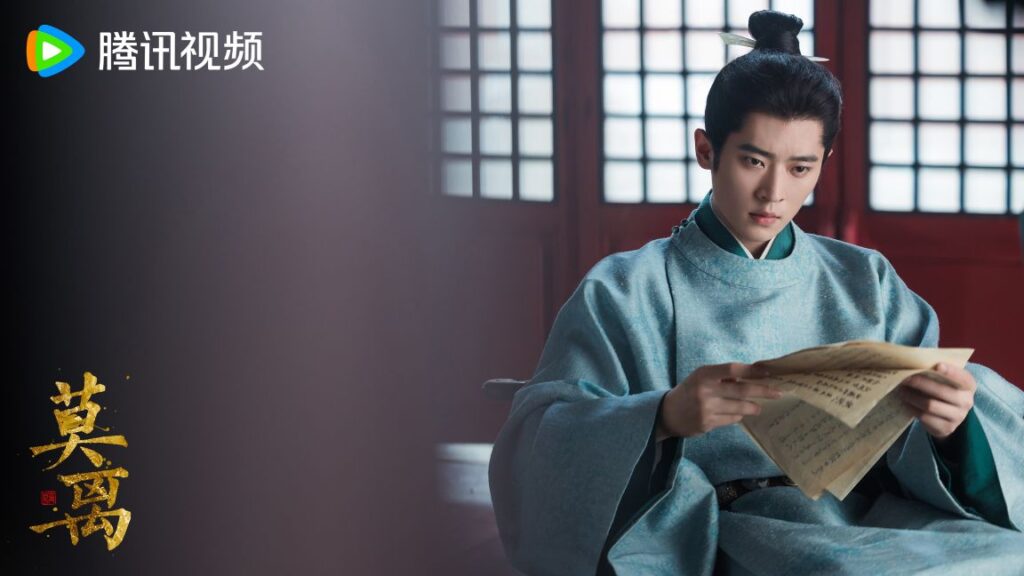
mo xiu yao 墨修尧 Cheng Lei 丞磊
Prince of Ding
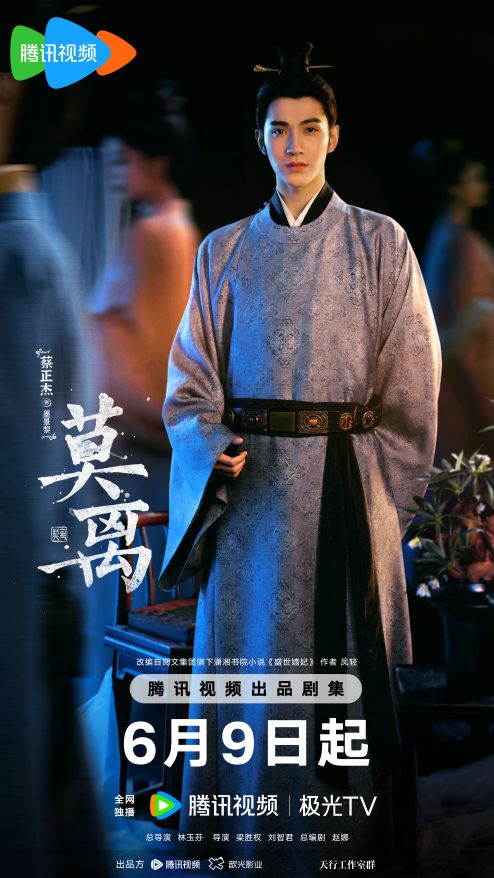
mo jing li 墨景黎 Cai Zheng Jie蔡正杰
Prince of Li, House of the Former Crown Prince
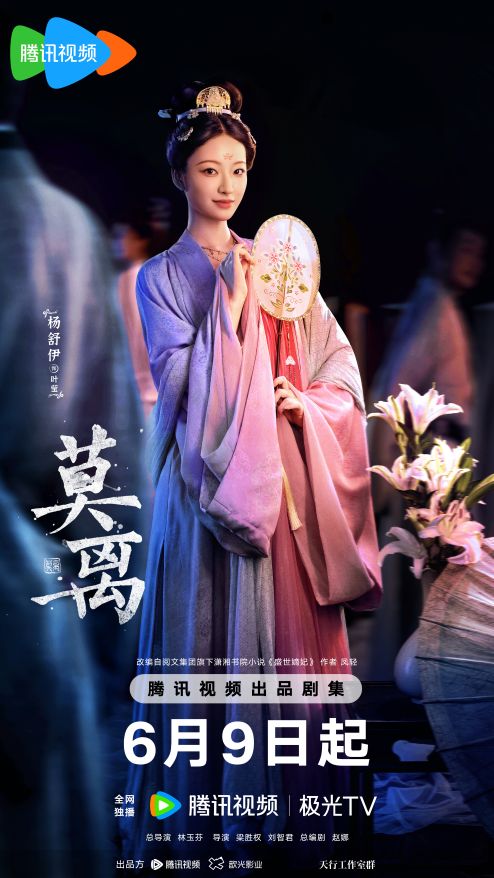
ye ying 叶莹 yang shu yi 杨舒伊
Sister to Ye Li
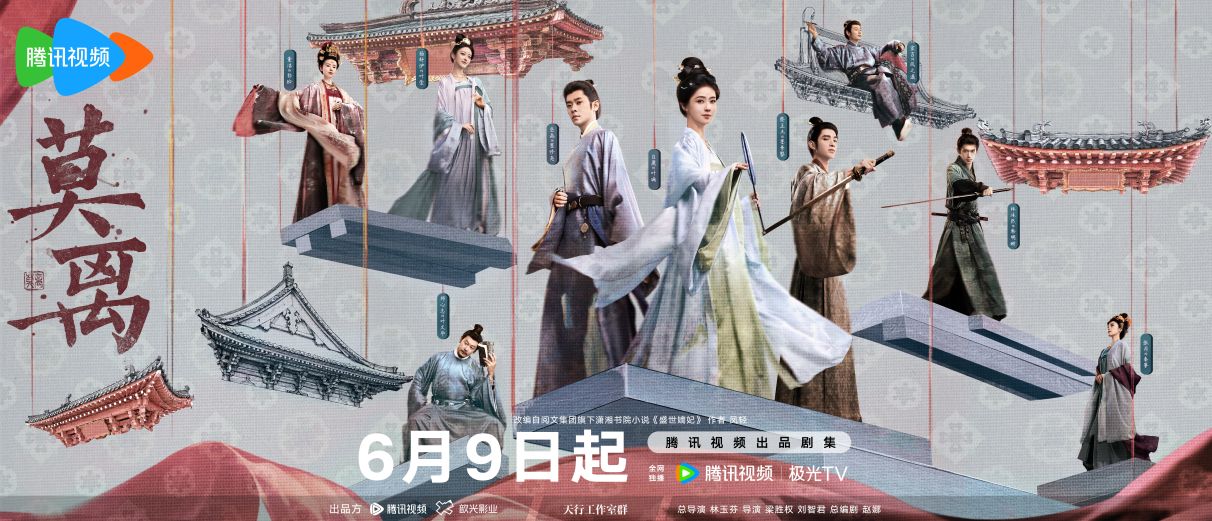
Overall Thoughts
Bai Lu is having a REALLY tough time right now with a SIGNIFICANT amount of public backlash in China. If you haven’t heard, listen to our podcast episodes on the topic. She lost over a million followers on various social media platforms and public discourse is VERY negative against her.
It against this backdrop that First Jasmine aired. Despite still having a strong fanbase, First Jasmine “only” peaked at around 28,000 on Tencent’s popularity index. I say “only” because this drama was likely supposed to be a “30,000” hit for Tencent this summer. It was an S+ budget drama, directed by Lin Yu Fen, a director who helmed massive hits like Eternal Love, and stars popular actors Bai Lu and Cheng Lei. This drama unfortunately underperformed by this popularity metric.
More tellingly is that while Bai Lu had tons of trending topics on social media surrounding the controversy and conspiracy about her person, this drama generated very little commentary on Chinese social media.
The joint marketing situation tells the same story. Bai Lu and Cheng Lei appeared together for promotions at the very beginning of the drama’s run but there hasn’t been a huge marketing push for them. I feel like all sides are trying to just have this drama air as quickly as possible so Bai Lu can fade from the public eye for now and keep quiet.
That is a shame there’s all this external drama happening because I actually liked this drama and think it’s Bai Lu’s strongest Costume Drama performance in a while.
However, I would emphasize that this is a binge drama, not a chase drama. Meaning, this drama can seem flat on the surface and requires quite a bit of patience for a payoff. It is NOT one of those “satisfying” or Shuang Ju 爽剧 where there’s a strong dopamine hit every episode that is now so prevalent in Chinese dramas both long form and short form. I started watching when 33 episodes were already available, which meant I could binge freely. In that context, I found it genuinely decent. It was carefully constructed, emotionally grounded, and thoughtful enough. My rating is a 7 if you binge it, and probably closer to a 6.5 if you chased it day by day. The Chinese idiom that kept coming to mind while watching was 细水长流 which means a slow, steady stream that builds quietly over time. So I can see why you might not like this show because of its pace.
As for the show itself, I watched about 90% of this drama with my brow furrowed, because even though I liked the show enough and kept watching, something just felt “off”. I spent a long time thinking about what that was and I’ll get into that below.
What I Liked
rMature Take on Conflict Resolution and Relationship Building
I’m realizing that a drama or a story shines when there is an external conflict and the main characters have to work together as mature adults to solve that conflict rather than when the conflict is targeted at each other. In this drama, the primary conflict within the Prince of Ding’s household stems from the grief and shame surrounding the death of Mo Xiu Yao’s brother, the former Prince of Ding, who was executed for returning to the Capital without being able to produce an imperial decree/edict in the midst of the death of the former Emperor.
It is against this backdrop that Ye Li marries Mo Xiu Yao. She has her own personal backstory and goals but is also exceptionally clear eyed about what she’s getting into in the Prince of Ding’s household. It is a family that is deeply traumatized by what happened 8 years ago. Ye Li works to help Mo Xiu Yao, his sister-in-law, and his nephew process and move through that wound. It is through this mechanism that the foundational relationships between Ye Li, Mo Xiu Yao, and the rest of the household are built. While the “CP” or chemistry is not necessarily passionate compared to some other romances, the relationship and romance builds slowly, genuinely, and believably. Befitting of two deeply traumatized individuals.
What I also appreciated is that no one in the Prince of Ding’s household is a “bad” person. They all have their own trauma to work through and when they do with Ye Li’s help, they come together genuinely. The nephew is smart and affectionate and the sister-in-law is kind and caring to Ye Li. This is why some of my favorite scenes of this drama are actually when the Prince of Ding’s family is just going about their day to day as a family. There is a genuine familial warmth with limited backstabbing that’s so prevalent in palace/harem dramas that’s refreshing to see. And also why a lot of Ye Ying’s scenes (2nd female lead) felt so jarring and childish. Ye Ying is over there trying to bring cliche jealousy tropes when Ye Li and the Prince of Ding’s family literally have other things to worry about.
Decently Constructed Storylines – MILD SPOILERS AHEAD. READ WITH CAUTION
From a pure plot architecture standpoint, this is a drama where the screenwriters clearly mapped the narrative across the two main leads, but especially for the main female lead, Ye Li. (I mean, this drama is based off of a book but hey, at least adaptation does its structural job well even if many other things didn’t follow the book). From the get go, you could tell something is “off” for both Mo Xiu Yao and Ye Li with Ye Li being the person that is more “off”. It’s hard to put your finger on it because both leads are dealing with a lot of other conflicts like revenge and building trust, but I quite enjoyed this feeling of tension and thrill in needing to be patient in figuring out why something just felt wrong, particularly for Ye Li.
There are plenty of nuggets sprinkled throughout the first 30 or so episodes that hint to a bigger truth and while many episodes may seem 平淡 or flat, I actually quite enjoyed the reveal. Because of those nuggets, this drama survives repeat viewings.
What Suffered
I spent a long time ruminating why my brow was furrowed for a lot of the drama despite being ok with binging it. Here’s what I came up with:
Flat 平淡 Directorial Choice/Resolutions
In a landscape where Chinese dramas heavily reward 爽剧 (Shuang Ju) or the cathartic, satisfying moments where antagonists are brought down in a blaze of glory, First Jasmine consistently flattens/diminishes its resolutions in ways that feel like afterthoughts rather than payoffs.
For example, when Ye Li exposes her uncle and his servant as the ones responsible for her maid’s murder, their punishment is delivered in a single line of dialogue. While a confrontation happens, in many other dramas, you would have Ye Li or Mo Xiu Yao be at court to see these perpetrators be served their punishment. Here, a line of dialogue happens and that’s it. The same pattern repeats with another villainous senior family member that I won’t spoil. One moment they appear to be alive despite being bedridden, the next we hear the household has put up funeral decorations signaling their death. Technically resolved but again, the energy and momentum of that action just “halts”.
Many early criticisms of the show point to the showing being “slow” or “boring” and I think it’s because of this specific choice to be a little more flat. While I can justify SOME of the directorial choices after watching the entire drama given what we know of Ye Li, most modern day Chinese audiences likely do not have that type of patience BECAUSE they’re so conditioned to expect that dopamine hit from those “shuang Ju” or satisfying moments.
Significant Patience Required for Bai Lu’s performance
In the first half of the drama, Bai Lu’s performance reads as emotionally flat. There is a scene in episode 7 where her sister-in-law is bawling her eyes out and while Bai Lu is comforting her, she’s quite wooden in comparison to her sister-in-law. In episode 13, Cheng Lei delivers an emotionally raw scene but Bai Lu appears to simply be standing nearby. If you are watching the early episodes for emotional range from Bai Lu, you are not going to find much,
BUT THIS IS WHERE THIS DRAMA REQUIRES PATIENCE. After watching through the drama, you could reasonably argue that the early flatness is intentional. As the drama progresses, you learn that Ye Li has undergone so much accumulated pain that she has almost no emotional bandwidth remaining. She is not wooden because Bai Lu lacks emotional depth. But it’s because Ye Li as a character has walled herself in as a survival mechanism. When that emotional dam finally breaks in the later episodes (in the 30s range), Bai Lu delivers scenes of genuine raw emotion. I teared up watching those scenes.
The problem is that this arc demands an enormous amount of patience. If you’re already predisposed to not liking Bai Lu or just a casual viewer of a costume drama, you likely won’t have that patience or interest to keep going.
(I will say, Bai Lu though, still needs to work on her enunciation. Her Mandarin enunciation is still often times very mumbled).
The Prince of Li’s Childish Storyline
The Prince of Li is positioned as a major emotional and political threat to both Ye Li and Mo Xiu Yao. In practice he operates several leagues below the older generation of antagonists and never generates the menace the drama needs him to.
Compare him to Mu Yang Hou (Marquis of Mu Yang) who was compelling precisely because he knew exactly who he was and acted with ruthless clarity. He owned his villainy. The Prince of Li, meanwhile, wanted to have his cake and eat it too. He made choices that destroyed any possible relationship with Ye Li but he kept wallowing about that decision. While his pain is understandable, owning what he’s done would’ve made him a lot more interesting. Instead he occupies an uncomfortable middle ground between genuine threat and self-pitying ex.
His scenes are genuinely the weakest of all the scenes in the drama. Ye Li and Mo Xiu Yao’s relationship absorbs barely a flicker of doubt because of him. He disappears from the drama for long stretches and his absence goes unnoticed. The same applies to Ye Ying, Ye Li’s sister, who spends the drama preoccupied with her husband’s emotional unavailability while the leads are navigating revenge, trauma, and empire-level stakes. The Empress Dowager and Mu Yang Hou had genuine gravitas. The Prince of Li and Ye Ying feel like they wandered in from a different, lower-stakes drama entirely.
In Depth Character Analysis - MAJOR SPOILERS BELOW
The Empress Dowager – The Most Interesting Character of the Drama
I actually found the Empress Dowager to be the most interesting character of the show and I would’ve LOVED to have more screen time dedicated to her backstory. But I think she is also a missed opportunity.
She runs the empire with an iron fist and is, by any measure, exceptionally capable. Her episode 34 monologue is genuinely powerful. She states that she was one of the best students at the Li Shan Academy and has the brains, the ambition, and the capability to make change in her own right. But she wasn’t willing to accept that she was confined to the conflicts in the palace/harem so she took matters into her own hand to take power.
The problem is that most of the opposition around her is primarily rooted in the fact that she is a woman not in her competence. Her ambition as a woman is framed as 祸乱朝纲 and 谋朝篡位 or usurping the throne and damaging the political order while the identical behavior in a man would simply be expected. In order to claim and hold power, she had to do terrible things. But compare her to say the Emperor from Joy of Life, even real people in history like Emperor Tang Tai Zong or even Emperor Yong Zheng who killed brothers and thousands of people to secure the throne? The Empress Dowager runs essentially the same playbook, yet she is positioned as the primary antagonist from the outset.
What makes this particularly frustrating is that the drama goes out of its way to build a world where women’s intellectual equality is celebrated. Li Shan Academy never excluded female students, the author of a revered text turns out to be a woman, the Empress Dowager herself was a top student from that same institution. The drama is actively constructing a feminist framework. But then the Empress Dowager is punished because she wanted the specific kind of power that this world kept telling her she was capable of but could never actually hold. The drama celebrates women pushing against the boundaries of a patriarchal society right up until one of them actually breaks through, and then it treats that breakthrough as the crime.
I almost wish the drama DIDN”T provide that powerful monologue in episode 34. If she was taken down for doing horrible things AND running the empire into the ground, I feel like that would’ve been more understandable. Because now it just seems like her primary crime was trying to succeed in a man’s world.
Ye Li – Damn, what a heartbreaking character
Episodes 31-34 deliver probably the strongest emotional punches of the entire show when you find out what actually happened to her. There was always this sense of foreboding throughout the show up until that point but because there was so much else going on, you didn’t have a ton of time to ruminate on it.
But wow, the level of mental fortitude and strength required to survive for as long as she did and after suffering as much as she did is honestly astounding. I commend this character for still being able to function in society after so long and being able to enact her plans for revenge even though she does have severe mental illness.
I also did appreciate that this character acted within the confines of her ability. While some of her revenge might have happened a little “too” easily, she is not out there saying she’s the smartest person in the room or has the best martial arts out there (even though she is). She’s more grounded and thoughtful than some other overly confident female leads.
Let me know your thoughts!
Karen
Loved this review, thought everything was spot on. Absolutely agree with the conflicting messages about this kingdom is friendly to the idea of education for female but not to having a female holding to position, not much different from our world today. I didn’t quite agree to production team using a teen actress to portray the younger Ye Li and there was not much depth in how she had developed her feelings toward Mo Xiu Yao either. I suppose it was difficult for Bai Lu to pull off acting at that age so they decided to have another person altogether to portray the teenager Ye Li. I was very impressed by how this drama addresses mental health issues and how Mo Xiu Yao was very sensitive about Ye Li’s sufferings, however, Ye Li’s recovery from the trauma by having Mo Xiu Yao forcing her to confront reality was rather rushed, I think the drama should do more to address the seriousness of mental health of patients. Thank you for your wonderful review!