Review: Sword and Beloved (2025) 天地剑心
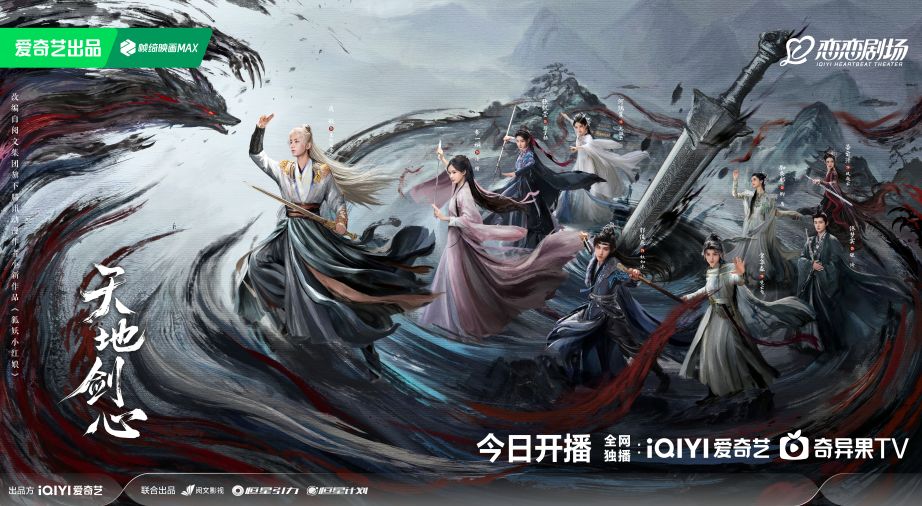
Summary: Wang Quan Fu Gui starring Cheng Yi is the son of Wang Quan Hong Ye and Dong Fang Huai Zhu from the prequel Love in Pavilion. As the heir of the Wang Quan family, he grew up with a strict regimen to be fit for battle as “The Soldier”. Qing Tong starring Li Yi Tong is a spider spirit who’s been sent by the Poison Lady to the Wang Quan family to spy for intel. She meets Wang Quan Fu Gui and, with his help, obtains her freedom. She is inspired by Wang Quan Fu Gui’s own desire for freedom from his family’s shackles. He, after experiencing a near death experience, adamantly denounces his birthplace to find his own path.
Platform: iQiYi
Episodes: 36
Initial Air Date: Oct 25, 2025
Rating: 6.7/10 – The strongest entry in the Fox Spirit Matchmaker trilogy, though that isn’t saying much. Despite striking costumes and impressive CGI, the repetitive, juvenile storytelling overwhelms the drama, and even Cheng Yi and Li Yi Tong can’t carry it across the finish line.
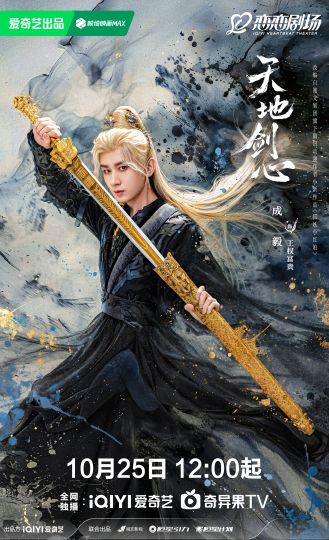
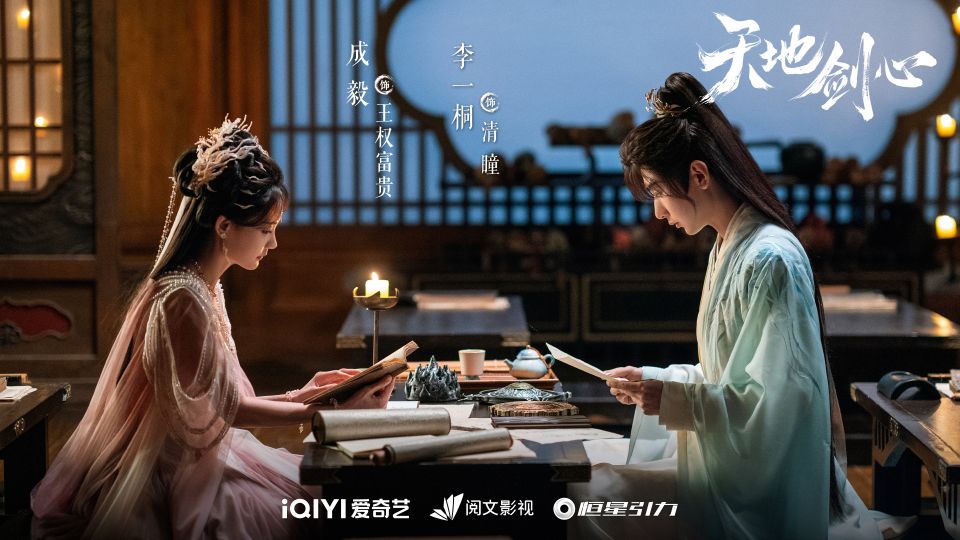
Wang Quan Fu Gui 王权富贵 Cheng Yi 成毅
"The Soldier" of the Wang Quan Family
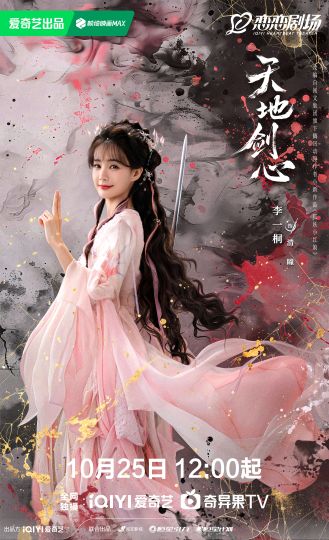
Qing Tong 清瞳 Li Yi Tong 李一桐
A spider spirit who gains a human form with the help of Wang Quan Fu Gui
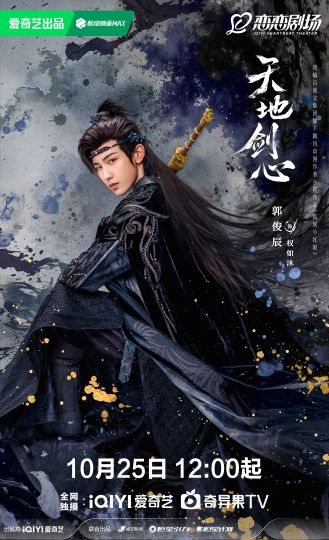
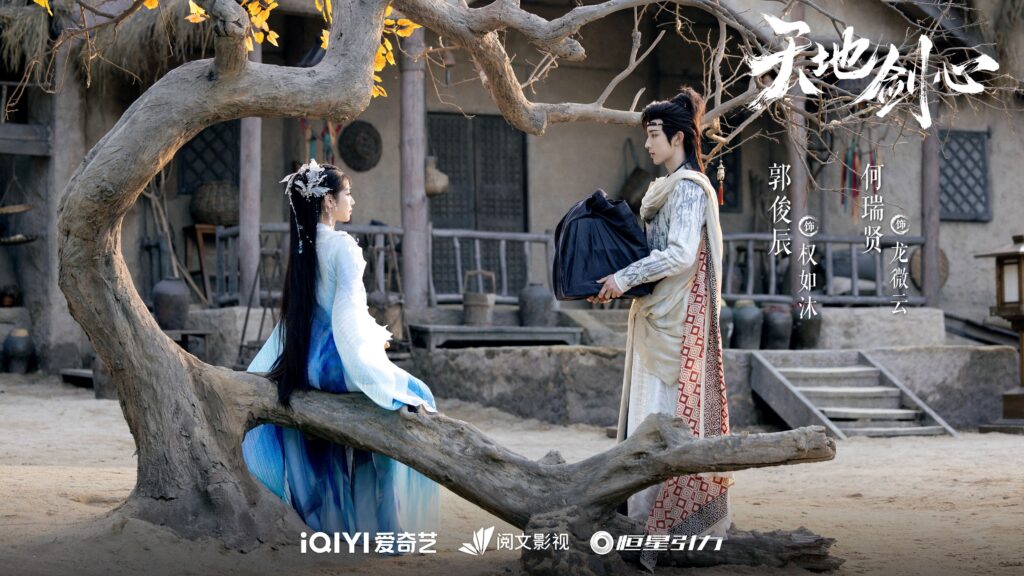
Quan Ru Mu 权如沐 Guo Jun Chen 郭俊辰
Cousin to Wang Quan Fu Gui who has differing motives to his father
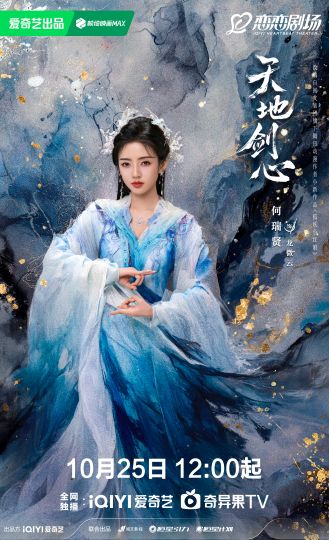
Long Wei Yun 龙微云 He Rui Xian 何瑞贤
The only remaining Dragon spirit
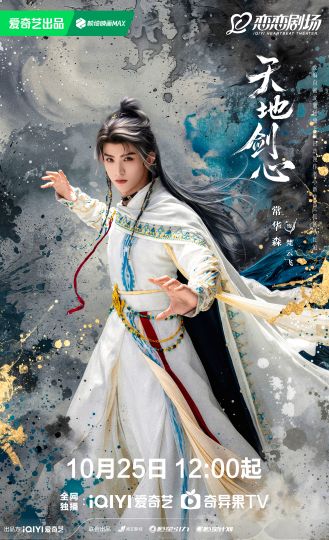
Fan Yun Fei 梵云飞 Hua Chang Sen 常华森
An innocent and kind Sand Fox Prince
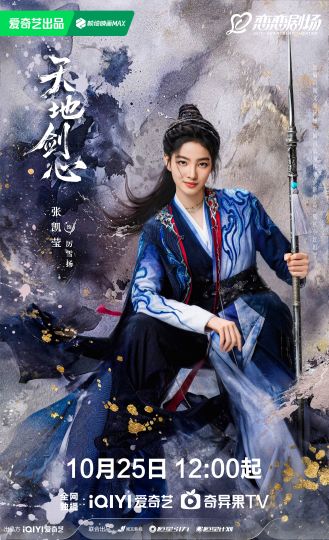
Li Xue Yang 厉雪扬 Zhang Kai Ying 张凯莹
A female general from the Li Family
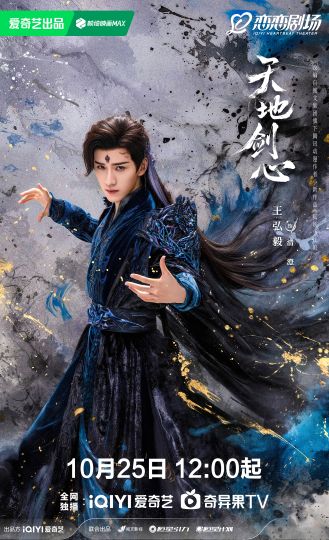
Qing Cheng 清澄 Wang Hong Yi 王弘毅
A spider spirit and younger brother to Qing Tong
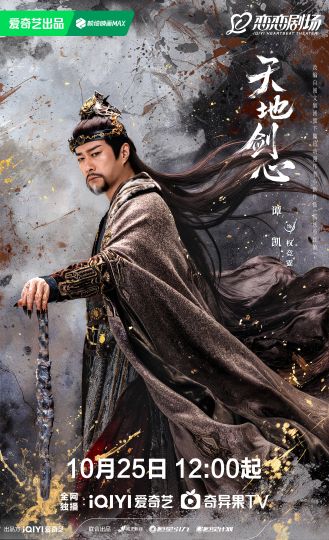
Quan Jing Ting 权竞霆 Tan Kai 谭凯
Extremely ambitious, he vows to take over the Wang Quan family
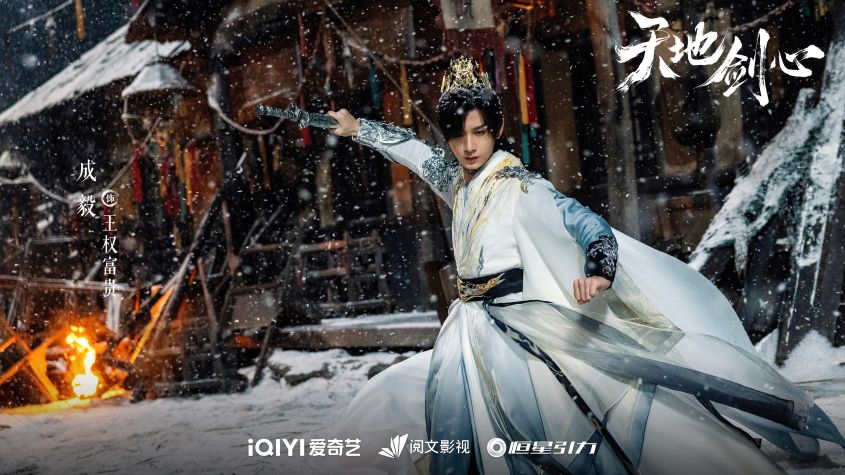
Overall Thoughts
As the final entry in the Fox Spirit Matchmaker trilogy, I went into this drama with very low expectations. Both Fox Spirit Matchmaker: Red Moon Pact and Love in Pavilion were critical and commercial disappointments, and I struggled to enjoy either. At this point, my main motivation for watching was simply to finish the trilogy. As a direct sequel to Love in Pavilion, this installment relies heavily on familiarity with its predecessor.
This drama is…passable. It certainly has the most coherent storyline of the three. Cheng Yi plays Wang Quan Fu Gui, a man raised from childhood to be “the Soldier,” a weapon designed to exterminate spirits. His father, hardened by the loss of his wife, family, and comrades, becomes emotionally distant and cold. Despite this upbringing, Wang Quan Fu Gui retains a fundamentally kind nature and refuses to kill indiscriminately. His path crosses with Spider Spirit No. 12580, sent to spy on him but lacking any malicious intent. Their relationship develops into one of mutual support as they push each other toward becoming better versions of themselves.
Even so, the drama remains bloated, weighed down by repetitive conflicts and baffling character decisions. Having not watched the original animated series, I can only echo a common criticism: by positioning itself as a continuation of Love in Pavilion, the adaptation loses much of its internal logic. The production seems caught between staying faithful to the source material and accommodating the prequel’s narrative, and its attempt to do both leaves the drama feeling compromised. The cast does what it can, but the writing flattens nearly every character into something one-dimensional.
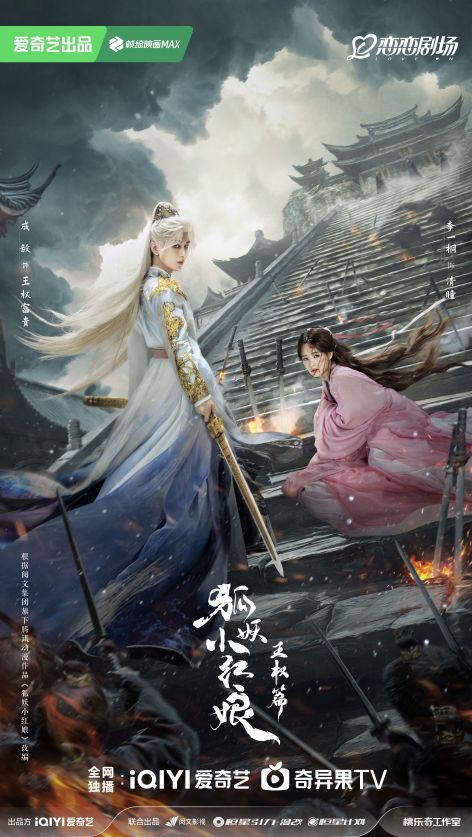
The handling of the release only added to the confusion. It’s difficult to understand why iQiYi chose to air this drama so soon after the failures of Love in Pavilion and Cheng Yi’s poorly received The Journey of Legend (赴山海). Originally titled Fox Spirit Matchmaker: Wang Quan Chapter (狐妖小红娘王权篇), the drama was abruptly rebranded shortly before airing as Sword and Beloved (天地剑心). This title completely obscures its comic and animated origins entirely. The late-stage effort to distance the series from its original IP feels both deliberate and desperate.
Ultimately, this marks another underwhelming outcome for iQIYI: three strikes for the Fox Spirit Matchmaker trilogy and yet another disappointing showing for Cheng Yi. While the drama eventually crossed 9,000 on iQIYI’s popularity index, it failed to surpass 20 million views per episode. For a drama that was highly anticipated as the savior of the series, reality has sunk that the producers and screenwriters just couldn’t create a good adaptation.
What I Liked
- Well-Paced Supporting Romances: One of the drama’s strengths lies in the efficient introduction and development of its two main supporting couples. Each relationship is established within a few episodes, clearly outlining the conflicts they must confront. Their storylines feel purposeful and emotionally resonant, offering just enough depth without overstaying their welcome. These were the standard meet cute romances but they worked (generally). While I initially wanted more screen time with these characters, the arcs ultimately feel complete. This is proof that the drama knew when to move on after telling a cohesive story. I just wished it did that for more of the drama.
- Cheng Yi and Li Yi Tong as Leads: Taken individually, both Cheng Yi and Li Yi Tong deliver solid, serviceable performances. They are clearly at ease in fantasy settings, and together they form the strongest leading pair of the trilogy. They understand their roles and execute them competently. While I did hope for more emotionally impactful moments, the limitations seem rooted in the screenplay rather than the actors themselves. The decision to use voice dubbing for both leads also results in a smoother and more enjoyable viewing experience.
- High-Quality Costumes and CGI: Staying true to the Fox Spirit Matchmaker franchise, the production values remain a standout. The costumes and CGI are consistently impressive, and this installment is arguably the most visually polished of the three. Each character is outfitted in elaborate, thoughtfully designed costumes with rich colors and textures. While the early CGI for Qing Tong’s spider form is somewhat uneven, it stands out as a minor flaw in an otherwise visually strong production.
What Didn't Work
- Repetitive Antagonists and Frustrating Character Writing: One of the central antagonists is introduced early on, with another emerging midway through the drama, yet both spend an inordinate amount of time repeating the same monologues about their motivations. Despite their crimes, they are repeatedly forgiven or conveniently allowed to escape, draining the narrative of tension. One villain in particular contributes little to the overall plot; their descent into villainy feels unearned, yet they continue to monopolize screen time. After hearing the same speeches over and over again, it becomes hard not to suspect that these scenes exist purely to pad runtime rather than advance the story.
- Implausible and Unsatisfying Endings: The handling of character fates is equally uneven. Antagonists linger on endlessly, surviving everything like cockroaches, while several secondary characters are abruptly killed off seemingly for shock value alone. These deaths feel hollow and poorly motivated, made worse by the baffling decisions that lead to them. Instead of emotional impact, they inspire frustration.
- Juvenile Decision-Making: Compounding these issues is the prevalence of illogical, immature choices. Characters routinely walk headfirst into obvious traps with little to no preparation, despite fully knowing the risks. Even more egregious is the ease with which the protagonists forgive murderous antagonists based on nothing more than empty promises to “do better.” This leniency predictably leads to repeated disasters, yet the cycle continues unchecked. Kind-heartedness is admirable; willful stupidity is not.
- Lack of Romantic Chemistry: While Cheng Yi and Li Yi Tong both deliver competent performances, their chemistry as a couple is lacking. Their romance unfolds slowly and at great length, but never quite sparks. They function convincingly as kindred spirits or close companions, each helping the other grow, yet the emotional pull of a romantic partnership never fully materializes. The decision to keep them separated for much of the drama further weakens the relationship, and in the end, I found myself far more invested in the supporting couples than in the main pairing.