Review: Generation to Generation (2026) 江湖夜雨十年灯
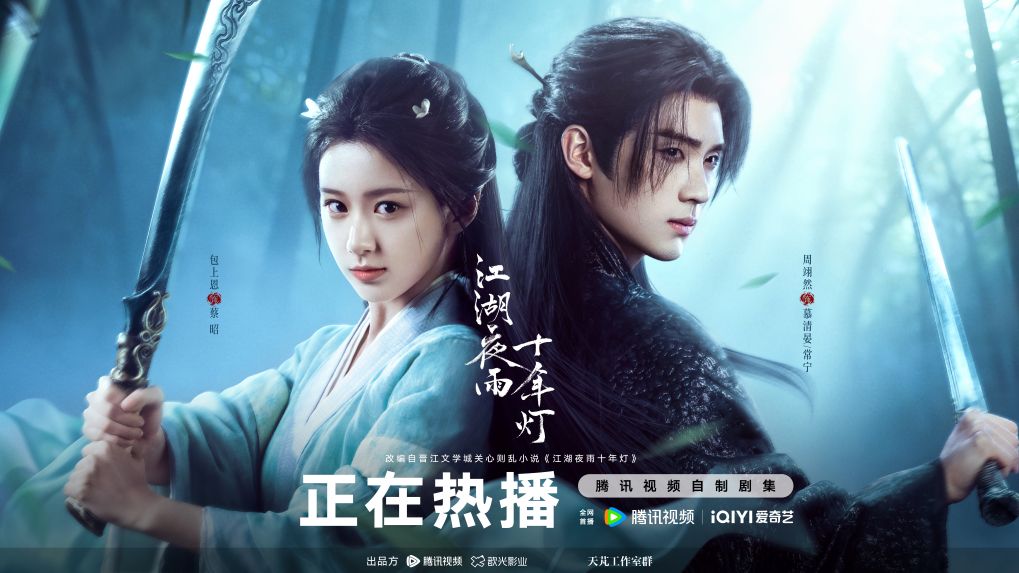
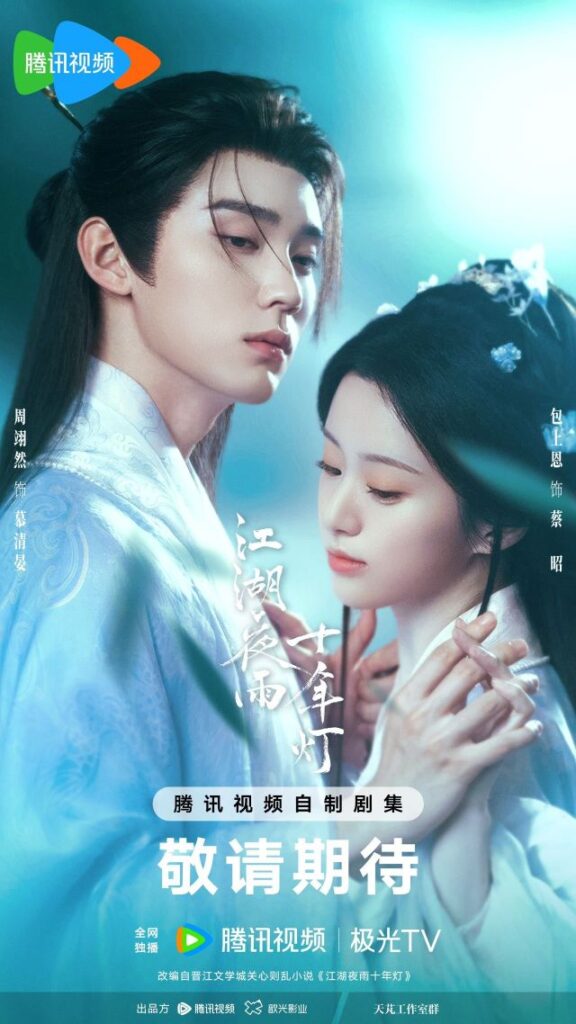
Summary: Fifteen years ago, Nie Heng cheng, the leader of the Demon Sect, slaughtered countless people across Jiang Hu. The fearless Cai Ping Shu, finally kills Nie Heng Cheng but also perishes in the fight. Now, Cai Ping Shu’s niece, Cai Zhao (ft Bao Shang En), is naturally free-spirited and was deeply fond of her aunt. Her parents forcibly send her to the Qing Que Sect to study martial arts. On the journey there, she encounters the massacre of the Chang Family Fortress and rescues the sole surviving young man, Chang Ning (ft Zhou Yi Ran). Chang Ning is brought Qing Que Sect to recover. Cai Zhao soon notices contradictions in Chang Ning’s story, raising her suspicions. She begins investigate the mystery of Chang Ning’s identity. Soon after, nefarious forces appear in Jiang Hu, threatening the unsteady peace in the land. Cai Zhao must decide on her allies, uncover the mysteries surrounding her aunts death, to save Jiang Hu.
Platform: Tencent
Episodes: 37
Airing Date: February 22, 2026
[Through 14 episodes] Review 6.0/10 – A disappointing drama that struggles with uneven performances from the leads and a story that sidelines its martial arts world in favor of a fairly standard romance. While the older generation’s storylines are far more compelling, inconsistent execution ultimately holds the series back.
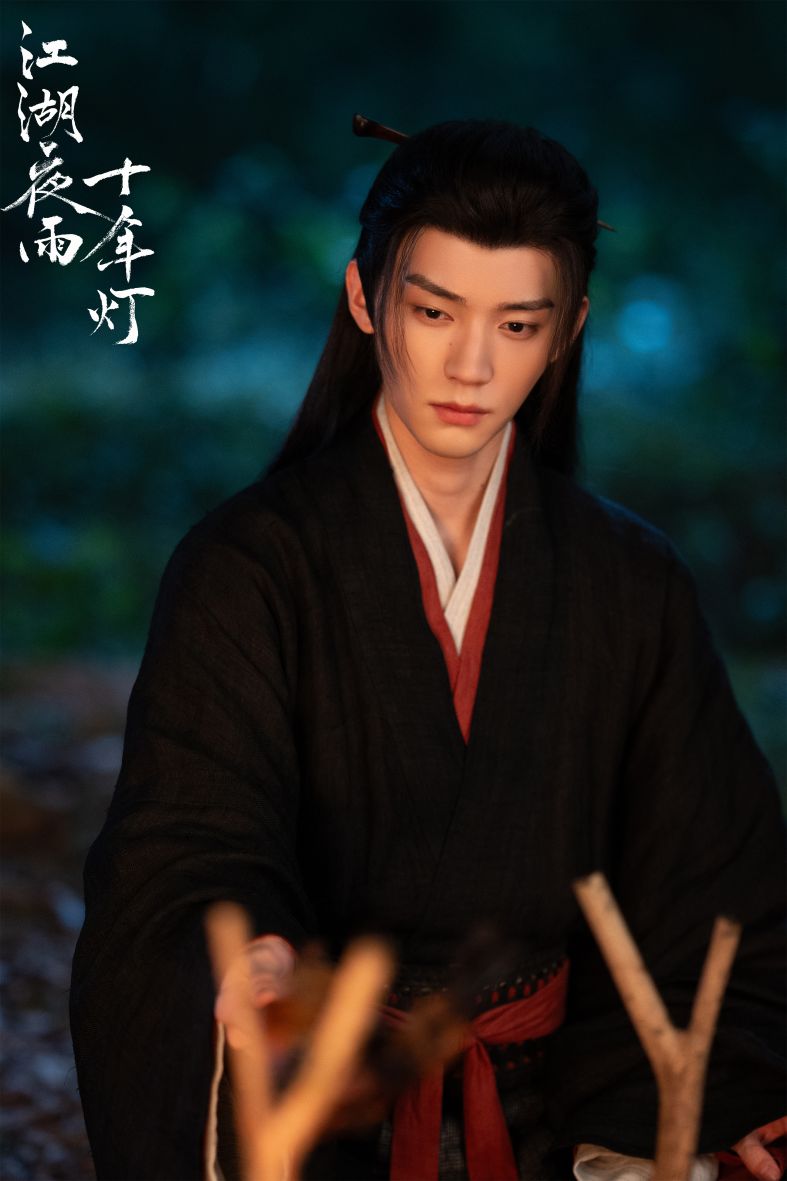
Chang Ning 常宁 Zhou yi Ran 周翊然
Surviving member of the Chang family who has ulterior motives
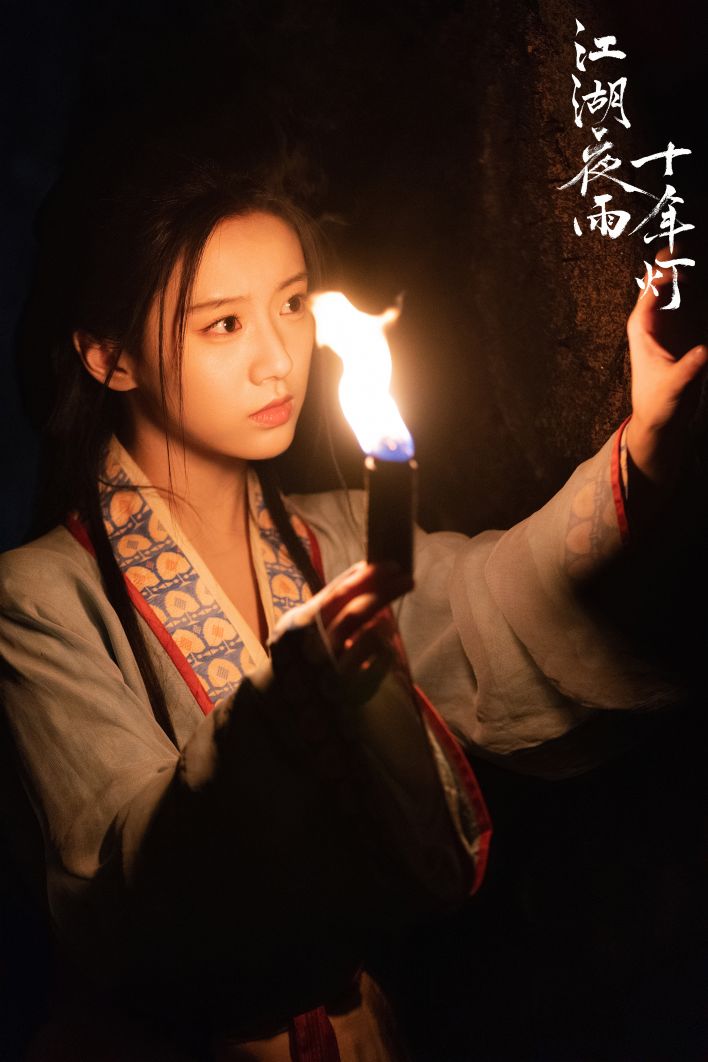
Cai Zhao 蔡昭 Bao Shang En 包上恩
Niece of the legendary Cai Shu Ping and pupil of the Qing Que Sect

Song Yu Zhi 宋郁之 Yu Jia Cheng 余嘉诚
3rd Brother of the Qing Que Sect
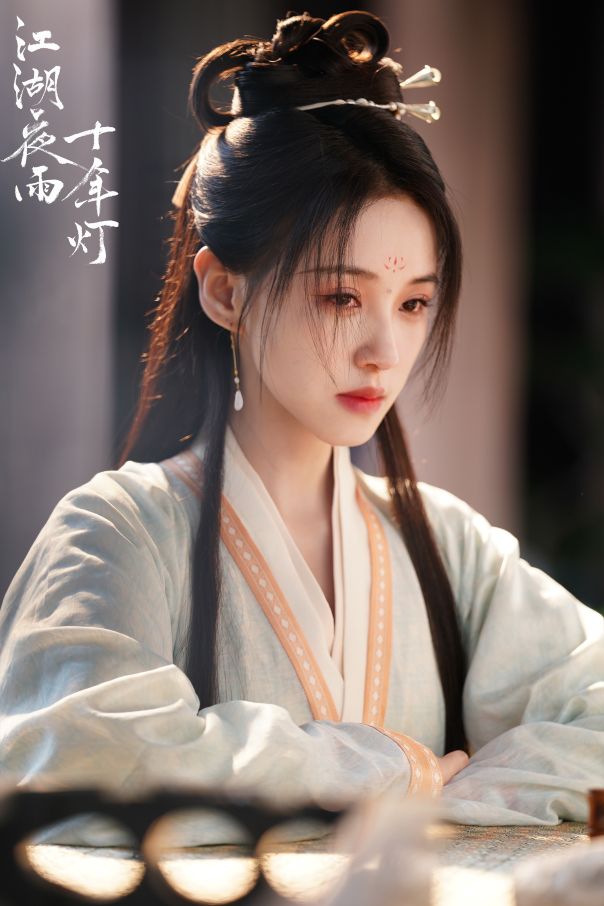
Qi Ling Bo 戚凌波 Fan Jing Yi 范静祎
Daughter of the leadr of the Qing Que Sec

Overall Thoughts
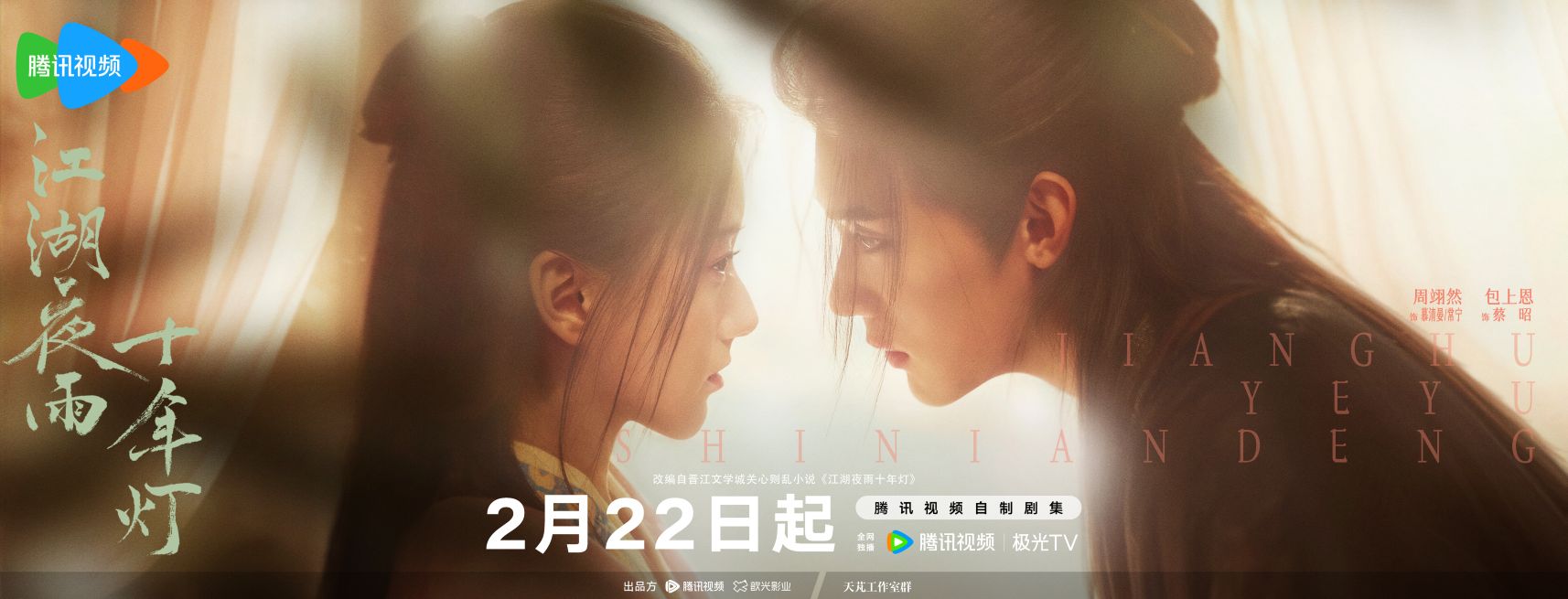
Marketed as a sweeping martial arts epic with a central romance, the drama ultimately feels much closer to a conventional romance series where the martial arts setting functions largely as background. The story hints at a more compelling premise, one centered on the long-term consequences of events that occurred fifteen years earlier and how those decisions continue to shape the younger generation. However, the adaptation struggles to fully develop this theme, and the narrative frequently shifts its attention back to the central relationship instead of exploring the broader conflicts within the martial world.
The performances from Zhou Yi Ran and Bao Shang En also fail to anchor the series. As the main leads, they carry the bulk of the screen time, yet their portrayals lack the emotional depth needed to sustain the drama’s central storyline. In contrast, many of the actors portraying the older generation deliver more nuanced and convincing performances, making those characters and their histories far more engaging to watch with their limited screen time.
The production does have occasional strengths. Certain scenes feature attractive visual compositions, and the character concept of Cai Zhao provides moments of charm through her wit, independence, and strong sense of self. Yet these positive elements are often overshadowed by inconsistent execution. Limited martial arts choreography, dated visual effects, and uneven production design weaken the overall sense of immersion.
The drama is adapted from a novel by Guan Xin Ze Luan, the author behind the highly successful adaptations The Story of Minglan and Love Like the Galaxy. Given the popularity of those works, expectations for this project were naturally high. So far, however, audience reception has been underwhelming. On Tencent, the drama has struggled to surpass a heat index of 24,000, while on iQIYI it has not reached 6,000. Those figures suggest the series has yet to generate significant momentum.
What Worked
- Compelling Storylines for the Older Generation: Some of the most engaging parts of the drama revolve around the stories connected to the older generation. As the plot unfolds, viewers gradually uncover the hidden tensions beneath what initially appears to be a peaceful martial world. Beneath the surface calm lies a great deal of unresolved conflict. The audience learns about these secrets alongside the younger protagonists, and it becomes clear that many of the elders are still living with the consequences of choices they made years ago. Their past decisions continue to ripple into the present, affecting their students and children. This intergenerational dynamic adds meaningful weight to the story and creates some of the drama’s most intriguing narrative threads.
- Visually Beautiful Imagery Despite some production issues elsewhere, the drama does occasionally deliver beautiful visual compositions. There are several moments where the cinematography stands out, capturing atmospheric landscapes and carefully framed character shots. The director also appears to have a particular fondness for wind machines, which are used quite liberally throughout the series. While sometimes excessive, the effect often contributes to the dramatic visual style and enhances the aesthetic presentation of the characters, especially Zhou Yi Ran, whose scenes are frequently shot to highlight his on-screen presence.
- The Character of Cai Zhao: As a female lead, she is written with several appealing qualities. She is fiercely loyal, independent, and quick-witted, with an intelligence she is not afraid to use.
Although she occasionally gets into trouble through her mischievous behavior, it is clear to those around her that she ultimately acts with good intentions. This sincerity earns her the respect and affection of many characters. Another refreshing aspect of her characterization is that she maintains clear boundaries with the people around her, avoiding unnecessary romantic entanglements or love triangles. Her personality and moral clarity make her easy to root for.

What didn't work
- Weak Lead Performances: One of the drama’s biggest shortcomings lies in the performances of the two leads, Zhou Yi Ran and Bao Shan Gen. Both actors seem more focused on striking visually appealing poses and maintaining a polished on-screen image than fully inhabiting their characters. Zhou Yi Ran often appears preoccupied with looking camera-ready rather than conveying the emotional depth of his role. Bao Shang En, meanwhile, frequently delivers her lines with a blank expression and struggles to respond naturally to her scene partners, which makes many interactions feel flat. As a result, supporting actors often overshadow her in shared scenes. Although both leads used their own voices for the post-production dubbing, the voice work and the on-screen acting rarely feel synchronized. Ironically, the voice performances convey far more emotion than their facial expressions or body language, creating a noticeable disconnect between what we hear and what we see.
- Martial Arts Feels like an afterthought: For a series set squarely in the world of Jiang Hu, with an ongoing conflict between the Bei Chen sects and the Demon sects, the lack of meaningful martial arts action is surprising. The lead characters participate in very little combat, and when fights do occur, the camera frequently cuts away to stunt doubles performing the actual choreography. Because of this, the drama often feels closer to a fantasy romance than a martial arts story rooted in the traditions of the wuxia genre. The moments that focus on the long-standing rivalries and grudges within the martial world are far more compelling. Unfortunately, those elements are often sidelined in favor of developing the central romance between the two leads.
- Disjointed Storylines and Familiar Tropes: The drama introduces a rich world with plenty of potential storylines, but many of these threads are either underdeveloped or quickly abandoned. Characters sometimes appear briefly only to die soon after, leaving little impact on the overall narrative or on the protagonists. This constant introduction and abandonment of plotlines creates a sense of missed potential. I found myself wishing that these ideas had been explored more fully instead of being dropped. At the same time, the younger generation of characters is written using very familiar tropes. The central relationship often resembles the classic “domineering CEO falls in love with me” dynamic, simply transplanted into a martial arts setting. The addition of a one-sided love triangle further reinforces these well-worn storytelling patterns.
- Inconsistent Costume Design: The production reportedly drew inspiration from clothing styles of the Jin Dynasty (3rd–5th century CE), which is rarely depicted in historical dramas and initially feels like a refreshing choice. However, the execution is inconsistent. Many supporting characters appear in costumes and hairstyles clearly modeled after this historical period, while the two leads often wear outfits and styling that do not match the same aesthetic. As a result, the visual world of the drama feels oddly fragmented, as if the main characters and the rest of the cast exist in different stylistic settings.
- Outdated CGI: In recent years, many Chinese dramas have made noticeable improvements in computer-generated effects, but this production unfortunately falls short of that trend. From poorly rendered monsters to overly bright swarms of pink butterflies and large CGI condors, many of the visual effects look dated, resembling something produced a decade ago. These moments repeatedly break immersion and make it difficult to stay fully engaged with the story.
- Uneven Production Quality: The drama was promoted as having filmed extensively on location across China to capture natural scenery. In practice, however, much of the visual environment feels artificial. Natural landscapes are often overshadowed by obvious soundstage sets, poorly integrated green-screen backgrounds, and heavy reliance on indoor filming locations. One particularly noticeable example is a bridge that appears repeatedly throughout the series as the setting for multiple scenes, yet it is clearly surrounded by green screen. Instead of enhancing the world of the story, these production choices often highlight its artificiality.