
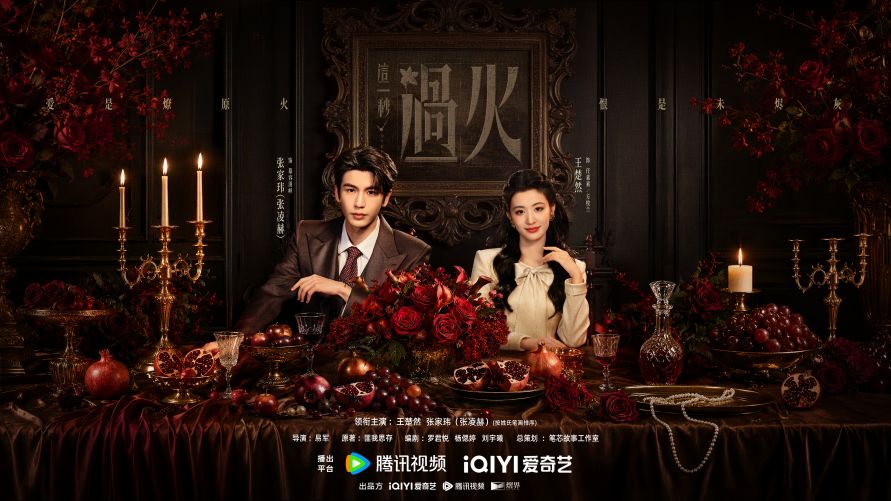

Review: Overdo (2026) 这一秒过火
Summary: In Republican-era Shanghai, Mu Rong Qing Yi (ft Zhang Ling He), the young son of a warlord who was mistakenly swapped at birth, endures abuse at the hands of his adoptive father. As a teenager, he flees and is saved by Ren Su Su (ft Wang Chu Ran), an act that ends up with devastating consequences for her and her family. Years later, the two meet again and develop feelings. However, Ren Su Su fakes her own death and flees in order to save others, leaving Murong Qing Yi reeling from heartbreak over losing his love. Three years later, Ren Su Su returns but she is now betrothed to Mu Rong Qing Yi’s older brother. Ren Su Su and Mu Rong Qing YI are caught between significant pain and misunderstanding mixed in with love. Just as misunderstandings begin to clear, a national crisis strikes. The two work together to face off against this national threat.
Platform: Tencent / iQiYi
Episodes: 33
Airing Date: July 19, 2026
Warnings – Mild violence, bloody scenes
Rating: 5.5/10 – A visually appealing cast and a few genuinely touching relationships aren’t enough to overcome a messy script and poorly executed production.
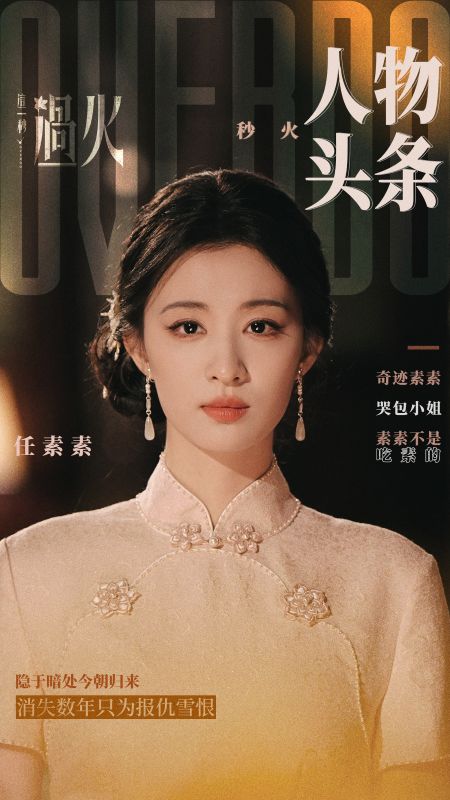
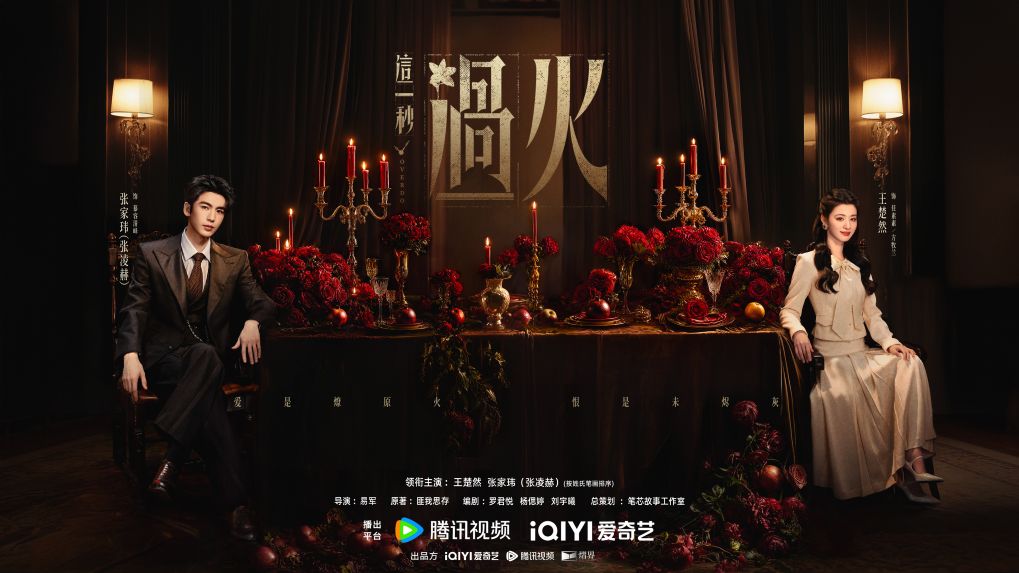
Ren Su Su 任素素 Wang Chu Ran 王楚然
Orphaned girl who vows to take revenge
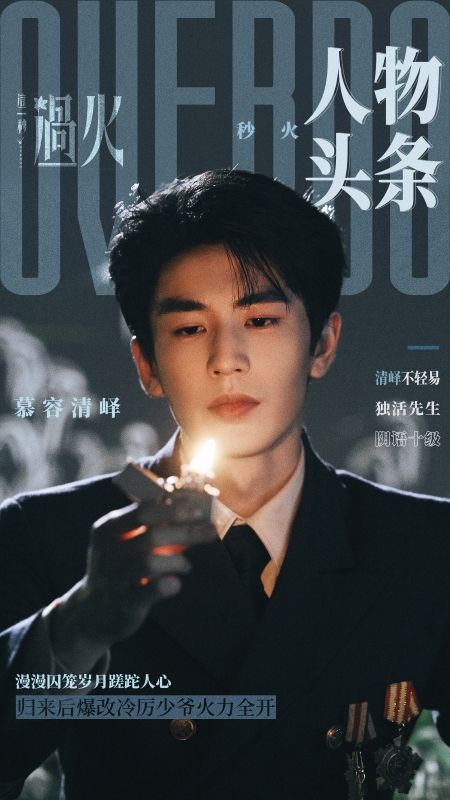
Mu Rong Qing Yi 慕容清峄 Zhang Ling He 张凌赫
Second son of the Mu Rong family

Mu Rong Qing Yu 慕容清渝 Fu Xi Bo 付辛博
Eldest Son of the Mu Rong family
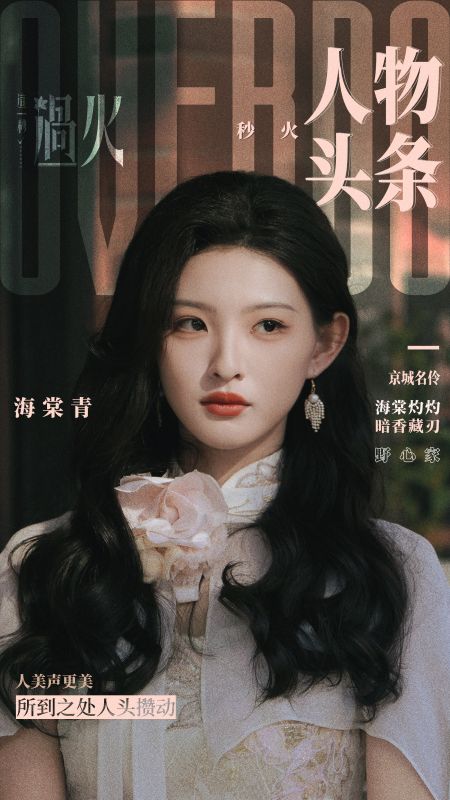
Hai Tang Qing 海棠青 Wang Zi Su 王籽苏
Celebrated performer and friend of Ren Su Su
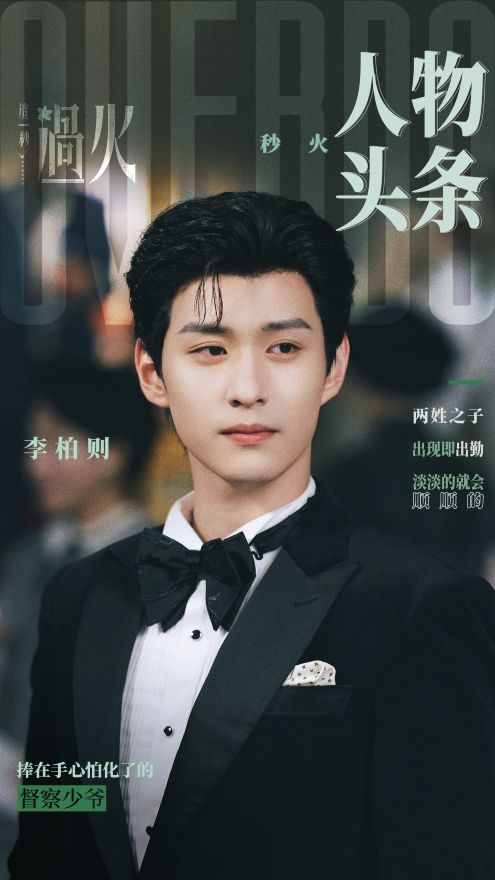
Li Bo Ze 李柏则 Xu Zhen Xuan 徐振轩
Heir of the Li family

Ye Zhe Hong 叶芝鸿 He Qiu 鹤秋
Local flight instructor
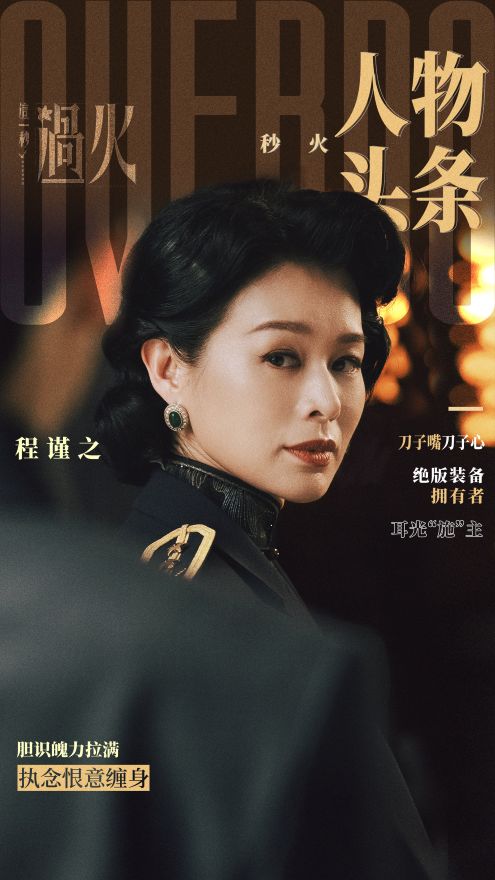
Zheng Jin Zhi 程谨之 Hu Xing Er 胡杏儿
Matriarch of the Mu Rong family

Mu Rong Jin Rui 慕容锦瑞 Wu Mo Chou 吴莫愁
Only daughter of the Mu Rong family
Overall Thoughts
This is a drama that had all the ingredients for a compelling Republic-era romance. It has two gorgeous leads, an intriguing web of family conflicts and hidden identities, and a story that mixes romance with revenge and greed, but unfortunately, the execution left me struggling to get through it. I made it to episode 12 of 33 before giving up and only spot-checked the remaining episodes.
The strongest parts of the drama are actually its relationships outside of the central romance. Ren Su Su’s bond with the women around her provides a genuine emotional core, with their shared experiences and willingness to protect one another giving the story some much-needed heart. The evolving brotherhood between Mu Rong Qing Yi, Mu Rong Qing Yu, and Li Bo Ze is similarly compelling, particularly because their conflicts are rooted in misunderstanding rather than genuine hatred. These relationships made me wish the drama had spent more time developing its ensemble rather than leaning so heavily into romantic angst.
Unfortunately, the production itself made the drama difficult to watch. The cinematography is excessively frenetic and the visual effects are particularly inconsistent, with some sequences looking polished while others appear surprisingly artificial. For a drama that generated so much anticipation with its paparazzi photos, generating millions of views, the finished product feels noticeably undercooked.
The biggest issue, however, is the writing. The opening episodes are weighed down by convoluted plotting, questionable character decisions, and an overwhelming amount of angst that never quite translates into meaningful emotional tension. Mu Rong Qing Yi’s behavior toward Ren Su Su is particularly difficult to root for, and the romance struggles because the characters’ actions often feel dictated by the plot rather than genuine emotional logic. The story eventually becomes more coherent, but it takes too long to get there.
There is definitely a beautiful drama hiding somewhere underneath all of this. The cast looks fantastic with some genuinely touching moments, and the underlying story has potential. But between the messy script, distracting production choices, and uneven visual effects, Overdo ultimately felt like a case of great ingredients that never came together on screen.
Fresh off his success from Pursuit of Jade, Zhang Ling He was hoping to continue that success with this highly anticipated drama. Unfortunately, this drama flopped in China, earning the nickname of “这一秒熄火” or “Flame out in one second”. Viewers ridiculed the first 10 episodes, and the drama was not able to pick up from there. The drama only peaked at 8,200 on iQiYi and 24,500 on Tencent. This was supposed to be a surefire hit this summer, but it really did flame out.
What I Liked
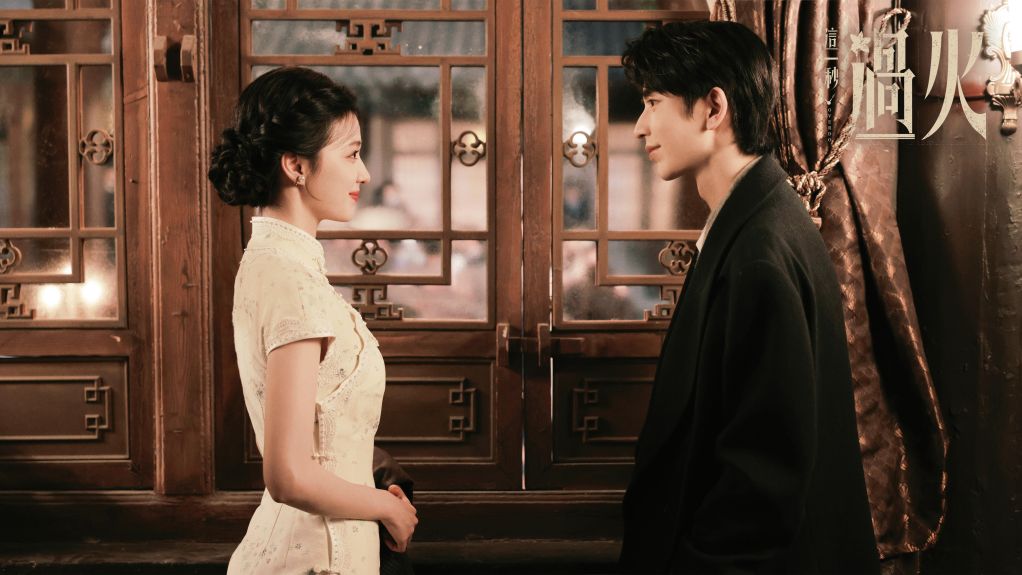
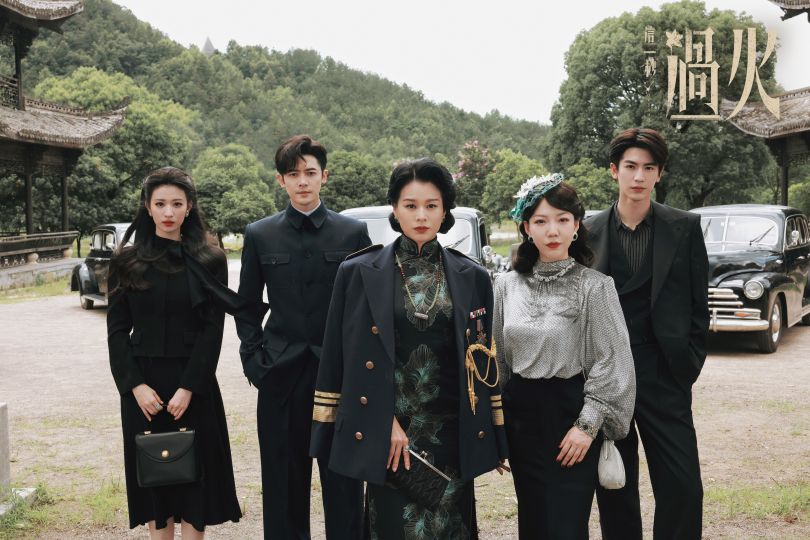
The cast is undeniably beautiful: The production heavily hyped the pairing of Zhang Ling He and Wang Chu Ran from the beginning, and at least in that department, the drama delivers. The two leads are striking together, but the appeal extends well beyond them. The supporting cast, and even the older generation playing their parents, are an exceptionally good-looking group. Whatever else I thought about the production, there was never a shortage of beautiful people on screen.
The sisterhood is one of the drama’s strongest elements: Ren Su Su’s motivations are deeply tied to the hardships she and her fellow sisters have experienced, and I appreciated that their relationships aren’t simply there to support her individual storyline. Each woman has taken a different path and developed her own identity, yet they continue to look out for one another. Their willingness to stand together even when doing so comes with very real consequences is genuinely touching. In a drama that often struggles to make its romantic relationships convincing, the bond between these women feels much more authentic and emotionally grounded.
The brotherhood has some surprisingly good development: The evolving relationship between Mu Rong Qing Yi, Mu Rong Qing Yu, and Li Bo Ze is another bright spot. There’s plenty of misunderstanding and resentment between the brothers, particularly because Qing Yu and Li Bo Ze don’t initially understand everything Qing Yi has endured. But importantly, their disagreements never completely turn into hatred. What I liked most is that they eventually make an effort to listen to Qing Yi’s perspective rather than simply dismissing him. Their relationship develops through conflict, hurt, and attempts at reconciliation, giving the brotherhood a more believable emotional arc than some of the drama’s romantic relationships.
What I Disliked
- The production feels surprisingly poorly executed: This was probably my biggest frustration with Overdo. The drama was filmed on location and had plenty of paparazzi photos circulating during production, which created a lot of anticipation for what looked like a polished, high-budget production. Unfortunately, the finished product doesn’t live up to that promise. There are so many technical and aesthetic choices that feel distracting rather than immersive.
- The costumes don’t do Wang Chu Ran any favors: Wang Chu Ran is already extremely slender, yet many of her qipaos are cut so tightly that they look restrictive rather than elegant. A well-made qipao should have structure and form, but these costumes often look as though they were simply pulled tightly around her body. It’s especially noticeable when compared with other period dramas where actresses of different body types are dressed in qipaos that actually complement their figures. This is also supposed to be a wealthy woman, but some of the costumes look surprisingly cheap. There are moments where the wardrobe doesn’t sell the character’s wealth or status at all.
- The background music is practically nonstop: Background music should enhance a scene, not compete with it. Here, it feels like the production is determined to use music in almost every possible moment, regardless of whether the scene actually calls for it. The constant soundtrack becomes distracting rather than atmospheric. The OST features songs from veteran singers Na Ying and Sha Bao Liang, so perhaps the production was particularly excited to showcase the music, but the solution seems to have been to play it all the time. After a while, I found myself wishing the drama would simply let some scenes breathe.
- The cinematography is exhausting to watch: The camera never seems to sit still. Shots are constantly cutting, zooming, or changing angles, sometimes every couple of seconds. Rather than making the drama feel dynamic, it creates a strangely frantic viewing experience. The framing is also particularly distracting. The camera frequently zooms directly into actors’ faces, while other shots place the actor in a tiny portion of the frame with doors, poles, other people’s backs, or random objects taking up most of the screen. There are also plenty of dramatic foot-to-face shots and sudden zoom-ins that feel more like stylistic flourishes than purposeful cinematography. The lighting doesn’t help either. Many scenes are so brightly lit that you can practically see the light source sitting in the background. At times, the lighting itself becomes part of the composition in a way that pulls me out of the scene.
- Some of the visual effects are genuinely baffling: This is perhaps the most disappointing part considering the production’s apparent scale. There are numerous shots where the backgrounds and effects look less like polished CGI and more like AI-generated imagery. Fire, fields of flowers, and other environmental effects frequently look artificial. The airplane sequence involving the two leads was particularly egregious and was widely mocked online. It’s the sort of scene that makes you wonder how it made it through the final editing process. Even the opening credits apparently became an issue. The original opening sequence was reportedly AI-generated and was ridiculed by viewers enough that the production eventually replaced it with footage featuring the actual cast. When viewers are asking, “Why does this look AI-generated?” during a supposedly big-budget drama, that’s not a great sign.
- The script is a mess in the opening episodes: Unfortunately, none of the production issues would matter quite as much if the story itself were compelling. But the first 10 or so episodes are so incoherent that I found it extremely difficult to stay invested. The drama throws us immediately into a convoluted web of family resentment, mistaken identities, revenge, and romantic angst. Mu Rong Qing Yi believes Ren Su Su betrayed him three years earlier and caused him to go to prison. Three years later, Fang Mu Lan a woman that looks exactly like Ren Su Su is engaged to his brother, Mu Rong Qing Yu. He becomes convinced that Fang Mu Lan is actually Ren Su Su and spends much of the early story trying to expose her. The problem is that Mu Rong Qing Yi’s behavior is incredibly frustrating to watch. He’s angry, suspicious, and constantly crossing Fang Mu Lan’s boundaries in an effort to prove his theory. Meanwhile, she’s pursuing her own agenda and repeatedly gets thwarted by him. The drama seems to want this to create romantic tension, but I mostly found myself wondering why these two people weren’t simply staying as far away from each other as possible. The airplane sequence is probably the perfect example of the problem. Mu Rong Qing Yi is arguing with Ren Su Su about whether she loves him while they’re in the middle of a dangerous situation, and in his anger, he literally throws away her parachute. There is a time and place for relationship angst. An airplane is not one of them. His behavior comes across less as tortured romantic angst and more as a petulant tantrum. There are also far too many moments where I simply couldn’t understand why a character was doing something or how the story had arrived at that point. The drama reportedly does become more coherent later on, but by then, I had already lost most of my interest.
- Zhang Ling He and Wang Chu Ran aren’t given enough to work with: I don’t think the cast is necessarily the problem here. Zhang Ling He, Wang Chu Ran, and the supporting actors are working with a script that gives them very little to work with, particularly in the opening stretch. There are hints of a potentially interesting story buried underneath all the angst and convoluted plotting, and the drama does eventually start pulling itself together. But when the foundation is this shaky, even good performances struggle to make an impression. I found myself less interested in what the actors were doing than in trying to figure out what the characters were actually supposed to be doing.
- It’s more Republic of China-inspired fantasy than a true period drama: I also needed some time to adjust my expectations about the setting. The drama is ostensibly set during the Republic of China era, in a city heavily inspired by Shanghai, but this is really a fantasy version of the period rather than an attempt at historical realism. The characters use plenty of modern-sounding expressions, the hairstyles often feel contemporary, and the wealth and technology available to the characters don’t always line up with what I would expect from the actual era. None of that is necessarily a dealbreaker. Once I accepted that this was essentially a Republic-era-inspired fantasy world, rather than a grounded historical drama, it bothered me less. Still, viewers going in expecting a more authentic Republican-era setting should probably adjust their expectations.
