
Review: Remnants of Gold (2026) 金色
Summary: Legend has it that 300,000 taels of gold are hidden somewhere in the vast desert. Zhang Lu Yao (played by Xin Zhi Lei), the sole survivor of a massacre that wiped out her entire family over the gold, returns to the desolate desert, determined to avenge her family. Along the way, the two encounter Pu Ying (played by Yin Fang), a seventh-rank Jin Yi Wei officer investigating the massacre, and Yu Hou (played by Chen Kun), the Liang zhou Deputy Commissioner stationed on the remote frontier of the desert. They also meet Ban Cha (played by Gao Wei Guang), a free-spirited man from the northwest. Each of them has their own agenda, but through a series of twists and coincidences, they all become entangled in this dangerous and unpredictable deadly struggle over the desert’s hidden gold.
Platform: Tencent
Episodes: 13
Airing Date: August 25, 2026
Warnings – violence, bloody scenes
Rating: 6.5/10 – The acting, especially from Xin Zhi Lei, scenery, action, and atmosphere are all strong enough to make the drama worth watching, but the story and pacing make it difficult to fully invest in.

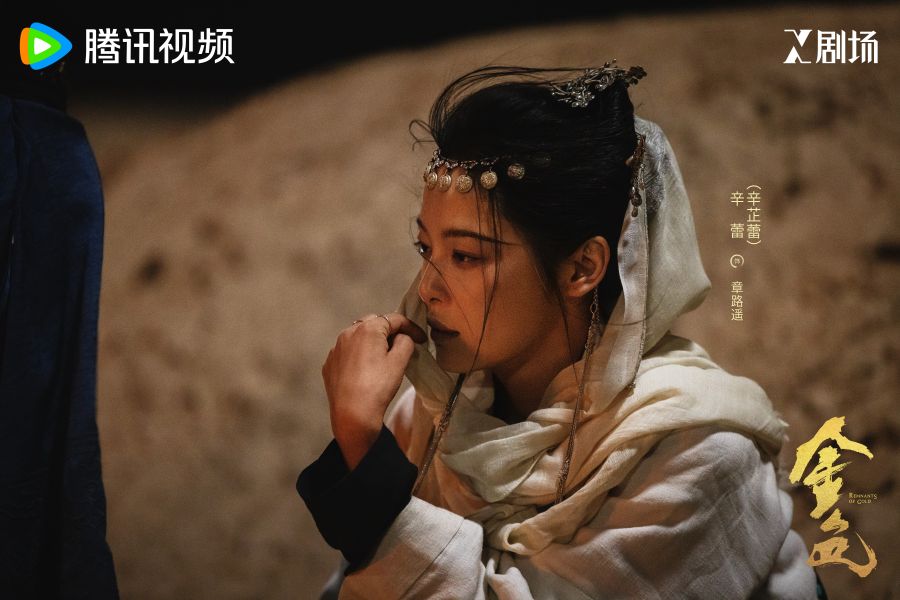
Zhang Lu Yao 章路遥 Xin Zhi Lei 辛芷蕾
Daughter of the Zhang family who returns to find her family massacred
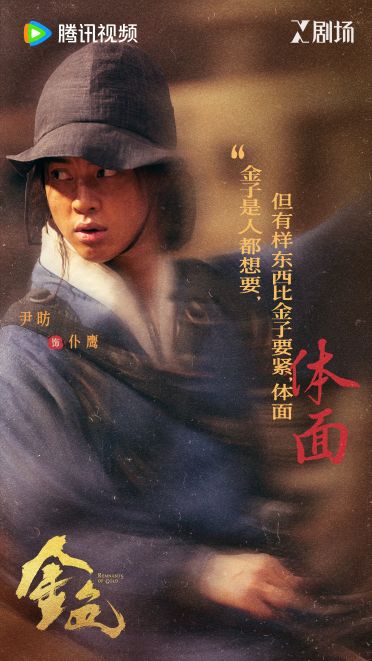
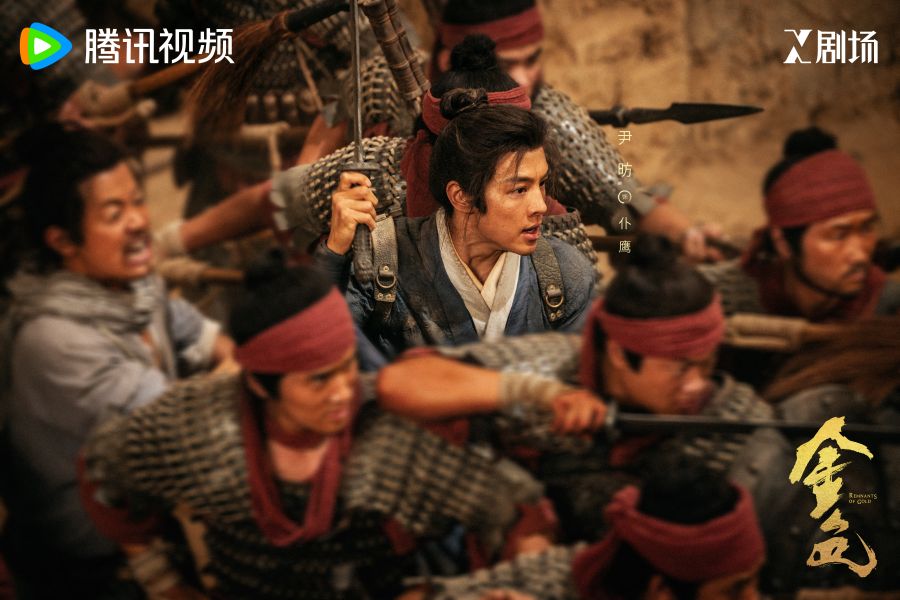
Pu Ying 仆鹰 Yin Fang 尹昉
Seventh Ranked member of the Jing Yi Wei sent from the capital
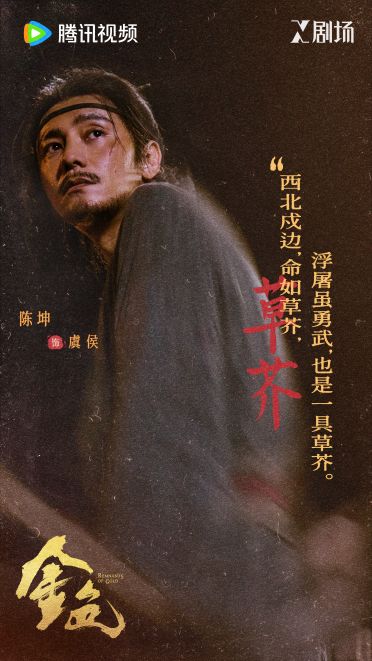
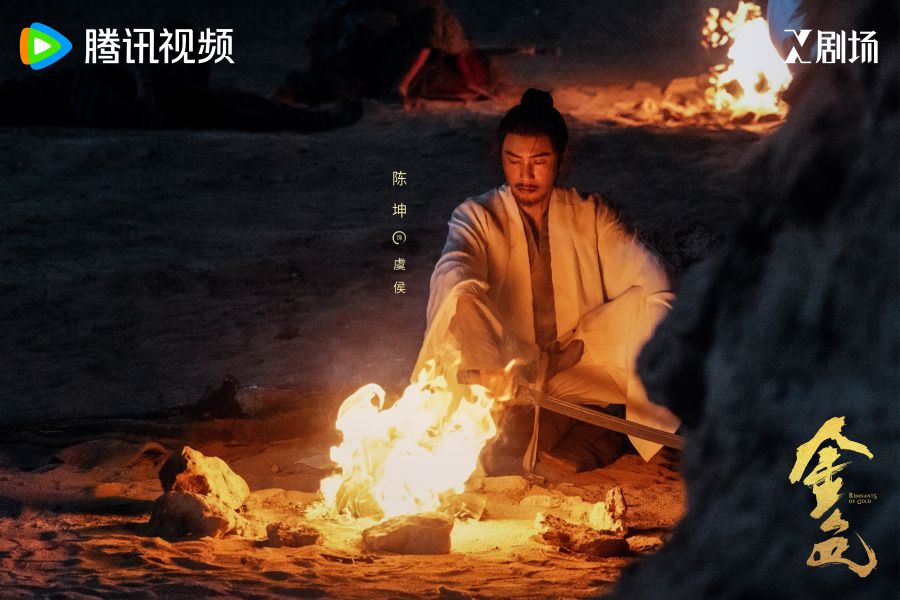
Yu Hou 虞侯 Chen Kun 陈坤
Liang zhou Deputy Commissioner
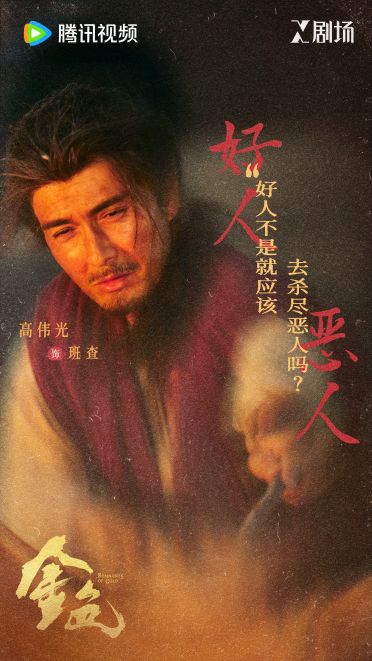
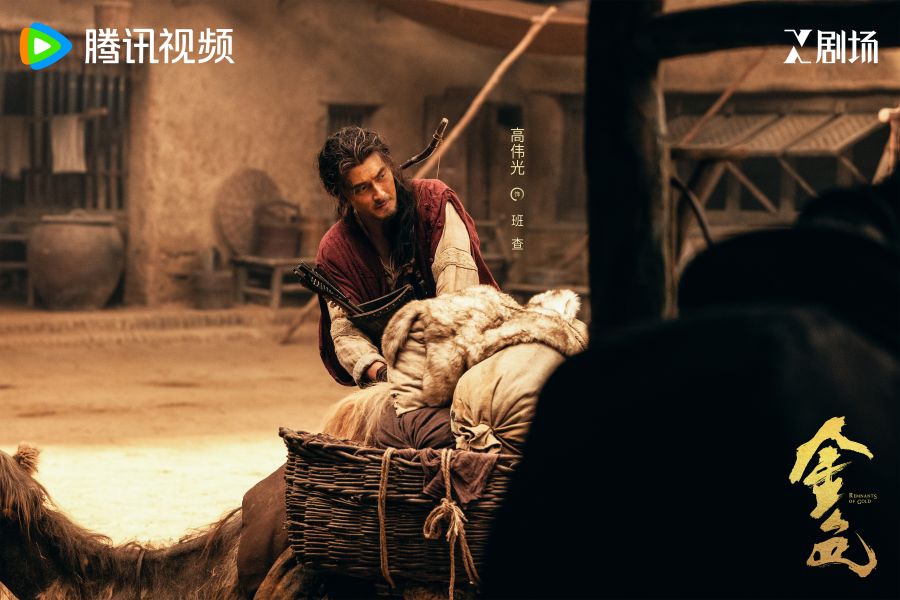
Hai Tang Qing 班查 Wang Zi Su 高伟光
A mysterious merchant
Overall Thoughts
Based on a Gu Long Wu Xia Novel, 大地飞鹰 or The Eagle Flies Across the Earth, director Xu Bing made significant changes to the story, restructuring the main storyline around a female-led revenge arc. Remnants of Gold is one of those dramas where I really wanted to love it more than I did. There is a lot to appreciate here: the stunning natural scenery, excellent performances across the cast, and genuinely impressive martial arts choreography. Xin Zhi Lei and Gao Wei Guang in particular bring a lot of depth and charisma to their characters, while the ensemble makes even the morally gray characters feel layered and interesting. The mystery surrounding the rumored 300,000 taels of gold also gives the story an intriguing hook, and I liked how the drama gradually revealed the different motivations and legends surrounding the characters.
Unfortunately, the biggest problem is that the story simply doesn’t live up to the cast and setting. The pacing is all over the place, with scenes and fights dragging on far longer than necessary, while other story developments feel rushed or unexplained. The drama spends so much time lingering on scenery or extended action sequences that it loses momentum, only to then rush through other parts of the story. At only 13 episodes, this really should have felt tight and focused, but instead it somehow still felt rather bloated. That’s probably the most frustrating part: there are genuinely great ingredients here, but the execution of the story wastes a lot of them.
This drama aired with little fanfare and despite the stacked cast of Chen Kun and Xin Zhi Lei. I hope we get more well executed Wu Xia dramas in the future.
What I Liked
- Stunning vistas: Filmed largely on location in Gansu Province, the drama makes excellent use of the deserts of Dunhuang, the western reaches of the He Xi Corridor, and the northern edge of the Qinghai-Tibet Plateau around Aksai. The natural scenery is breathtaking and really conveys the sheer scale of the landscape. I always appreciate when a drama takes advantage of China’s incredible natural beauty rather than relying heavily on indoor sets, and Remnants of Gold makes the desert feel like a character in its own right. You can almost feel the desperation, loneliness, and harshness of life in the northwest. The long shots of horses and camels crossing the desert are especially effective in emphasizing just how vast and unforgiving the landscape is.
- Excellent Acting: The entire cast delivers strong performances, but Xin Zhi Lei and Gao Wei Guang particularly stand out as the sharp yet deeply tormented Zhang Lu Yao and the mysterious merchant with a heart of gold Ban Chao, respectively. There really aren’t any weak links in the ensemble. I was even surprised to see Chen Kun in what is essentially a supporting role, but his presence adds another layer to an already impressive cast. Almost every character turns out to be more complicated than they initially appear, and the actors do a great job of bringing those layers to life. I also liked the use of regional accents and dialects. Since the characters come from different parts of the empire and have converged in the desert in search of gold, giving them distinct ways of speaking adds another layer of individuality and makes the ensemble feel more authentic. The accents aren’t always perfectly consistent, but it adds character to the world and didn’t detract from the overall experience.
- Intense Martial Arts: For a drama adapted from a wuxia novel, the martial arts absolutely delivers. The fight scenes, particularly in the early episodes, are exhilarating and well choreographed, with a real sense of 拳拳到肉, that satisfying feeling that every punch and strike actually has weight behind it. Even better, many of the actors are actively involved in the fight sequences rather than simply posing while CGI does all the work. There is certainly CGI involved, but the drama still puts plenty of emphasis on actual hand-to-hand combat, which makes the action feel much more grounded and visceral than what we often see in fantasy dramas.
- The unraveling mystery: The central premise, a rumor that 300,000 taels of gold are hidden somewhere in the desert, is a great foundation for the story. As each character enters the picture, we gradually learn more about their backgrounds, motivations, and connections to the mystery. I especially enjoyed the fact that so many of the characters operate in shades of gray. It’s not always immediately clear who can be trusted or what someone’s true intentions are, which keeps the mystery engaging.
- Aura farming!: One of the more interesting elements of the story is what I would affectionately call “aura farming.” After watching Nolan’s The Odyssey, I was reminded of how effectively a character’s reputation, legend, or sheer presence can be used to shape the story without necessarily relying on direct action. Remnants of Gold employs a similar idea, with certain characters building up reputations and cultivating an almost mythological presence around themselves. It also becomes an important part of several characters’ motivations and helps frame the larger mystery. Rather than simply being about who can fight the best or who can find the gold first, the story is also interested in how legends and reputations are created, and how those perceptions can influence the people around them.
What I Disliked
- Significant pacing issues: The drama suffers from major pacing problems. For a series that is only 13 episodes long, it somehow felt like it could have been three episodes shorter. Characters repeatedly flip-flop on their decisions, while certain scenes are drawn out for far too long, completely killing the momentum. At times, it felt like the director was so determined to showcase the scenery that we would just linger in the desert with little happening beyond admiring the landscape. The timelines and locations also weren’t always convincing. Characters would suddenly appear in the desert ahead of others, and it was unclear how they could have possibly gotten there so quickly.
- Elongated fight scenes: I praised the fight choreography earlier, but even the action sequences became excessive at times. There were fights that seemed to go on forever, with some taking up nearly three-quarters of an episode. Yes, the fighting looks great, but when an action sequence takes up that much screen time without meaningfully advancing the story, it starts to feel like spectacle for spectacle’s sake.
- Starts grounded, then suddenly becomes fantastical: The drama initially establishes itself as relatively grounded, keeping its action within the realm of poisons, martial arts, and hand-to-hand combat. But as the story progresses, it gradually ventures into more fantastical territory, introducing random CGI effects and characters with seemingly superhuman abilities. The shift is jarring because the show spends so much time establishing a more realistic tone early on, only to abandon those rules later.
- Deaths that ultimately feel meaningless: The show is quite liberal with killing off its characters. By the end, I found myself wondering what the point of it all was. Was the story simply about watching one character after another meet their demise? I was left feeling rather empty because it seemed like there was so much more story to tell, yet so much of the runtime was consumed by pacing issues, only for everything to end rather abruptly. The deaths therefore didn’t feel as impactful as they could have, they felt more like losses of potential for a story that never fully got to explore everything it had set up.