
Review: Spring of the Blade (一瓯春)
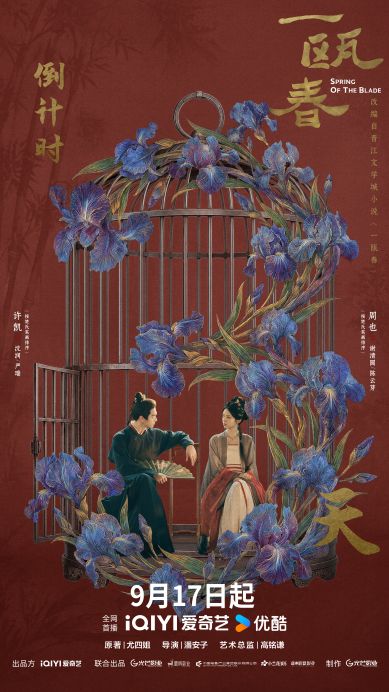
Summary: Chen Yun Ya (ft Zhou Ye) vows to get revenge on the person who murdered her mother. She returns to the family of her birth, the renowned Xie family, and regains her name as Xie Qing Yuan. She uses her new position to take down her enemies. While doing so, she encounters the haughty yet handsome young official Yan Rui (ft Xu Kai), who has been tasked with unearthing the corruption plaguing the city. The two come together to plot and scheme against their enemies and ultimately discover their true feelings about each other. They find that their enemies are close to home and must uncover the hidden secrets of the past
Platform: iQiYi / Youku
Episodes: 30
Airing Date: Sep 17, 2026
Warnings – Mild violence, bloody scenes
Rating: 6/10 – A gorgeously produced revenge drama with strong chemistry from the leads, but its increasingly ridiculous plot and frustrating character decisions ultimately keep it from living up to its considerable potential.
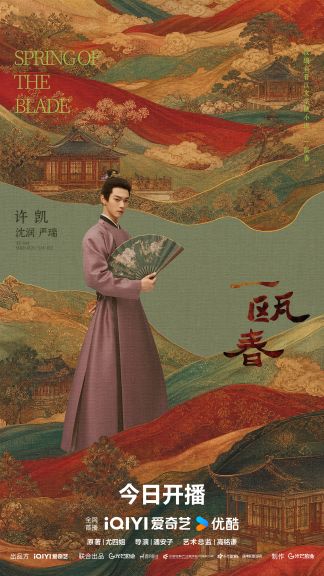
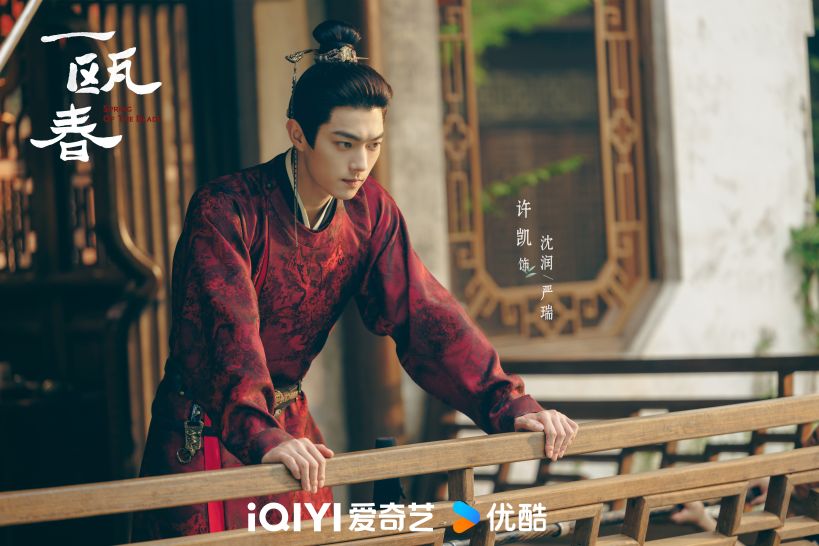
Yan Rui / Shen Run 严瑞 / 沈润 Xu Kai 许凯
Loyal confidante of the Emperor sent to uncover the corruption of Heng Tang
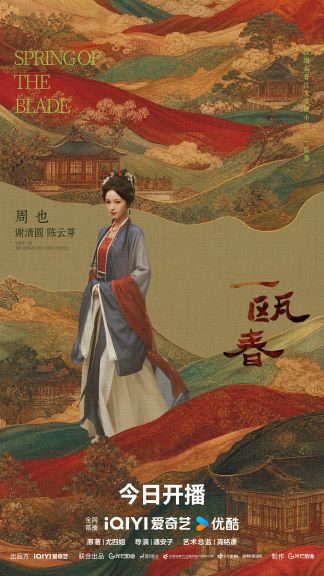
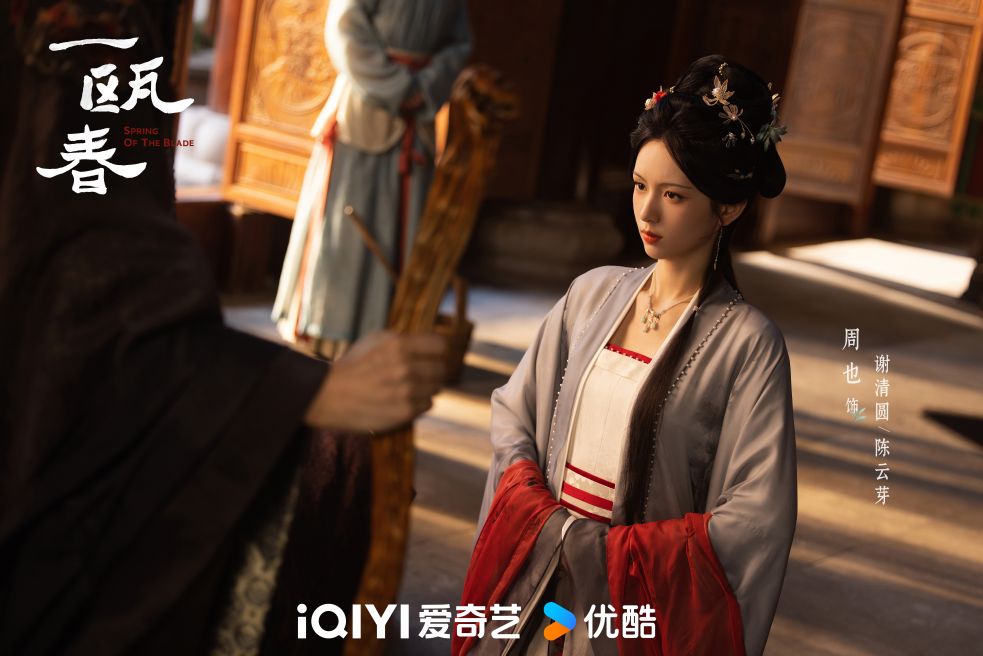
Xie Qing Yuan 谢清圆 Zhou Ye 周也
The fourth daughter of the Xie family who seeks revenge
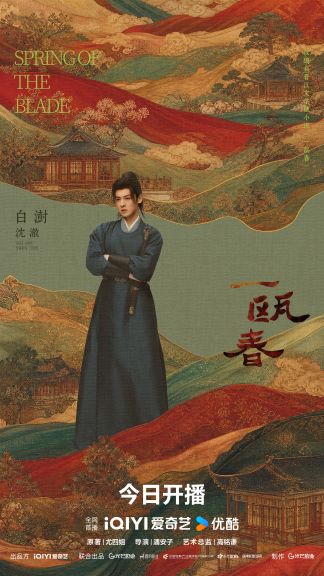
Shen Che 沈澈 Bai Shu 白澍
Younger brother of Shen Run who also seeks revenge
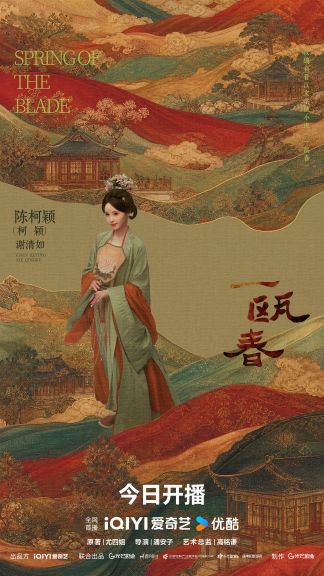
Xie Qing Ru 谢清如 Ke Yin 柯颖
The arrogant second daughter of the Xie family
Overall Thoughts
A Spring of the Blade is another revenge-driven period drama that unfortunately falters in the execution. Is it really bad? No. There are definitely things it gets right. Is it good? Also no, the plot has some truly ridiculous moments that made it difficult for me to take the story seriously.
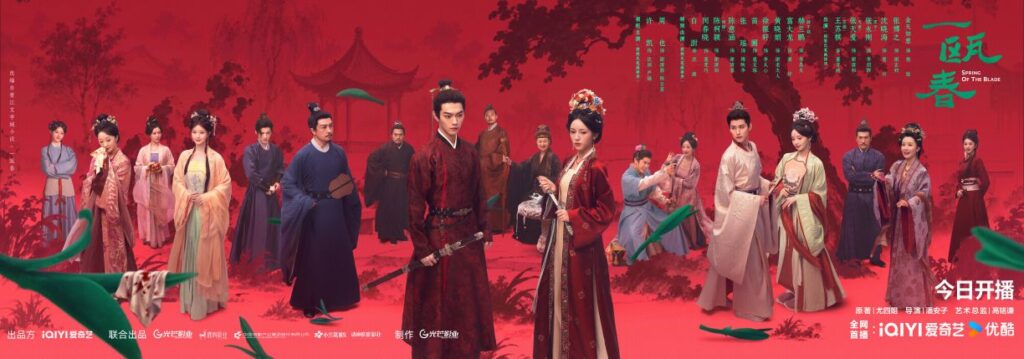
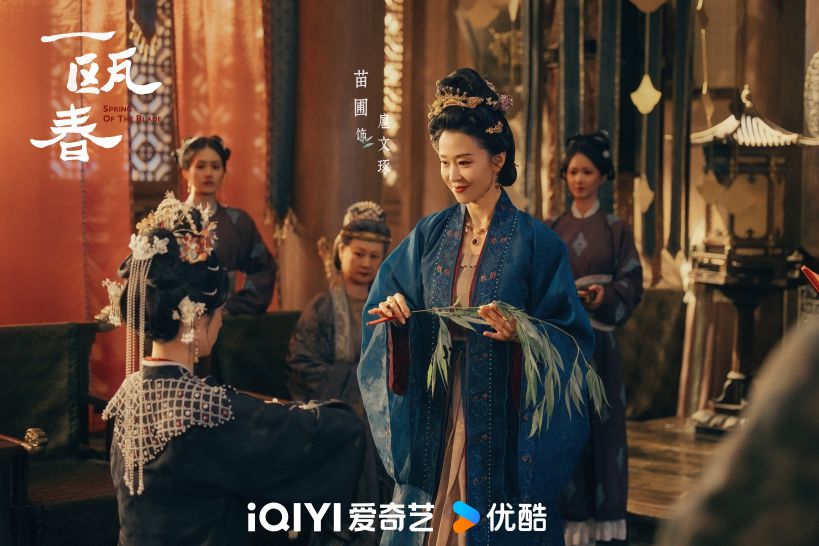
The biggest strength is undoubtedly the production and the cast. The drama looks gorgeous, from the Song-inspired costumes and styling to the beautiful on-location settings, and the younger cast is practically made for this kind of visual presentation. The veteran actors are even better, with Fu Da Long and Miao Pu bringing a level of subtlety and presence that elevates every scene they’re in. Zhou Ye and Xu Kai also have genuine chemistry, and there are moments where their relationship really works on screen.
Unfortunately, all of that is fighting against a script that repeatedly asks the audience to suspend their disbelief. Characters behave with almost no sense of historical propriety, make decisions that range from questionable to downright baffling, and important plot developments often feel like they’re happening simply because the story needs them to. The female lead, despite being presented as capable, also spends far too much time being rescued or assisted by the men around her. And while the drama has a darker, more oppressive atmosphere that I appreciated, the story itself isn’t strong enough to sustain that tone.
The result is a drama that looks considerably better than it actually is. There are genuinely good performances, beautiful visuals, and enough chemistry and atmosphere to make it watchable, but the ridiculous plot choices kept pulling me out of the story. Ultimately, A Spring of the Blade had all the ingredients for a compelling revenge drama, but the writing simply didn’t know what to do with them.
This drama failed to compete against the juggernaut Against the Current. It hasn’t breached 7500 on iQiYi’s popularity index and barely breached 8000 on YouKu’s popularity index. This also only has a 5.4 rating on Douban.
What I Liked
Beautiful setting and visual aesthetic:
The drama is set in a world reminiscent of the Southern Song dynasty, and the production really makes the most of its setting. The majority of the important scenes were filmed on location at Pu Yuan Fashion Ancient Town in Tong Xiang, Zhejiang, rather than relying heavily on studio sets. That makes a noticeable difference, the locations feel lived-in and authentic, and the cinematography is simply beautiful to look at. There is a softness and elegance to the visuals that fits the period beautifully.
The production also clearly drew inspiration from Song Dynasty aesthetics when designing the characters. Details like pearl face ornaments, lotus-shaped hair accessories, and the overall styling give the characters a distinct visual identity. I particularly appreciated that the hair and makeup don’t simply fall into the usual period-drama formulas. Each character has their own look, and paired with the Song-inspired costumes, the result is a cast that looks almost like they stepped out of a painting.
A gorgeous cast:
This is simply a beautiful cast, particularly among the younger generation. Xu Kai, Zhou Ye, Xu Zhen Xuan and the rest of the younger actors look fantastic in these costumes and hairstyles. When you combine the casting with the production design and Song-inspired styling, there are plenty of moments where the drama genuinely looks like a work of art. Even when I wasn’t particularly invested in what was happening in the story, I could appreciate how good everyone looked on screen.
The veteran cast really delivers:
If there’s one area where the acting is consistently strong, it’s the older generation. Fu Da Long and Miao Pu, in particular, are absolutely delicious to watch. They play these characters as the ultimate “smiling tigers”, people who can smile pleasantly while you know there’s an entire calculation happening behind their eyes. The veteran actors bring a level of subtlety and control that really elevates their scenes. They don’t need to move much or raise their voices to command attention; you can feel the scheming and calculation behind their characters simply through their expressions and presence. Fu Da Long in particular seems like he was given a role where he could really go all out, and he absolutely takes advantage of it. He’s clearly having fun with the character, and that makes him incredibly entertaining to watch.
It embraces a darker, more oppressive atmosphere:
I actually appreciate that A Spring of the Blade doesn’t try to lighten up its revenge-driven story with a constant stream of comedy. The drama is quite oppressive and heavy. It’s tense, bleak, and at times downright grim, and I think that works for the story it’s trying to tell. There are plenty of terrible people, complicated motivations, and morally questionable decisions, and the drama isn’t particularly interested in pretending that everyone is secretly good underneath it all. That darker atmosphere gives the series a more serious tone and helps distinguish it from the many period dramas that feel the need to inject humor into every other scene.
Good chemistry between the leads:
Despite my issues with the writing and some of the character decisions, I do think Zhou Ye and Xu Kai have genuine chemistry. Their interactions have a natural spark, and there are several more intimate and steamy scenes that work largely because the two actors have enough chemistry to sell them. Even when I wasn’t completely convinced by the development of their relationship on paper, I could believe the attraction between the two of them on screen. As one online comment put it, let’s just watch the two of them act without caring about the plot
Strong production design overall:
Beyond just the locations and costumes, there’s a clear effort to create a distinct visual world for the drama. The combination of the ancient-town locations, Song-inspired aesthetics, detailed accessories, and attractive cast gives A Spring of the Blade a very polished visual identity. This is definitely one of those dramas where the production itself is often more impressive than the story it’s telling. There were still plenty of scenes I enjoyed watching.
What I didn't like
The characters have very little sense of propriety:
One of my biggest issues with the drama is how casually almost everyone ignores the social rules and decorum that should exist in this setting. Yan Rui, for example, practically waltzes into the Xie family manor whenever he feels like it. He inserts himself into family matters, even when unmarried young women are present, and seems to have absolutely no concept of boundaries. Given the social conventions of the time, I found it difficult to believe that he could repeatedly show up at the Xie residence and interact so freely with the young ladies of the household.
And then there’s Yan Rui and Xie Qing Yuan’s relationship. The two are constantly meeting, hugging, and wandering around the city together while rumors are naturally flying. Yet neither seems particularly concerned about being seen. Things become even more ridiculous when Xie Qing Yuan is beaten by servants at the Xie residence, Yan Rui somehow appears to rescue her and carry her away, and because she has nowhere else to go, she ends up at the brothel where he’s staying, where he proceeds to remove her clothes to clean her wounds. And this is all happening within the first 10 episodes, when these two have barely even gotten to know each other. Whatever romantic development the show is trying to establish, these scenes just felt wildly implausible within the social context.
The Xie family isn’t much better. Xie Qing Yuan’s own sister, Xie Qing Ru, essentially calls her a whore in public, not once, but multiple times. She behaves like an obnoxious princess, yet no one seems particularly bothered by it. Another daughter is openly hostile toward Xie Qing Yuan in front of the elders. I’m not expecting everyone to behave perfectly; The Story of Ming Lan is practically built around family backstabbing and viciousness. But even in that drama, there is an understanding of when and where certain things can be said. Here, characters will openly say or do things that would have been deeply inappropriate, particularly in front of elders and other unmarried women, and the drama rarely seems to acknowledge it.
The plot relies on increasingly questionable decisions:
There are also quite a few moments where I found myself questioning the logic behind the characters’ decisions. At one point, a group of bandits threatens to invade the city, and the male lead’s brilliant solution is essentially to let them into the city so they can be wiped out from within. Unsurprisingly, this results in a number of innocent civilians being killed. The female lead is then sent by her family to seek reinforcements, encounters the male lead, and ends up surrounded by bandits, only to stand there while they apparently decide to attack the male lead one at a time. It’s the kind of scene where you stop thinking about the story and start thinking about the logistics of what you’re watching.
There are plenty of other examples. A woman is assassinated, and despite the female lead supposedly having fairly extensive medical knowledge, she simply stands there rather than immediately trying to help. Xie Qing Yuan then gives another woman the brilliant advice that she should elope to escape an arranged marriage. Never mind that the gentleman she’s supposed to marry is in mourning because his mother has just died, or that he’s actually going to inherit a title and there will be serious repercussions for this decision. Apparently the solution is simply to run away together for love. Then the servant proceeds to run around town loudly announcing that she can’t elope. This is precisely the sort of thing that would not be casually announced in public, particularly by a respectable family with other unmarried women whose reputations could also be affected.
The female lead isn’t as independent as she should be:
This also ties into one of my bigger frustrations with Xie Qing Yuan’s character. For someone who is presented as capable and intelligent, she spends a surprising amount of the story being rescued or assisted by the men around her. Yan Rui repeatedly inserts himself into her affairs and comes to her rescue, while suspiciously well-timed imperial edicts somehow appear whenever she needs saving. The second male lead also repeatedly rushes to her aid, and even her own brother agrees to participate in an elaborate scheme to help her uncover the truth.
There are certainly moments where Xie Qing Yuan takes initiative, but when you look at the overall story, there’s surprisingly little she accomplishes entirely on her own. I wanted to see her drive the plot rather than constantly having one of the male characters step in to protect, rescue, or assist her. It also makes some of the earlier scenes, where she’s put into increasingly dangerous situations, feel less like character development and more like convenient opportunities for the male leads to play hero.
The romance often feels unearned:
The romantic development doesn’t always fare much better. One male character sees Zhou Ye’s character from afar, meets her for what amounts to a few seconds, and immediately decides he’s hopelessly in love with her. From that point on, he’s willing to risk practically everything for her while completely rejecting other women he’s known his entire life. I’m perfectly willing to accept love at first sight, but there needs to be something behind the attraction. Here, he barely knows anything about her before declaring his undying devotion, so the relationship felt more like the script telling us that he’s in love rather than actually showing us why.
Zhou Ye’s acting is uneven:
There was quite a bit of criticism online about Zhou Ye’s performance, and while I don’t think all of it was necessarily fair, I do agree that her acting is inconsistent here. There are scenes where she’s clearly trying to convey intense sadness or emotional turmoil, but the performance becomes overly exaggerated rather than genuinely affecting. Interestingly, when she pulls back and plays things with more restraint and nuance, she can be much more compelling. Those quieter scenes actually stood out to me because they showed that she is capable of delivering the emotional weight the role requires—it just isn’t consistent throughout the drama.
Xu Kai’s own voice takes some getting used to:
A Spring of the Blade is Xu Kai’s first period drama in which he uses his own voice, and he has previously mentioned in interviews that he wanted to improve his Mandarin before showcasing his own voice. The result is honestly better than I expected, but I still don’t think it quite holds up, especially when he’s surrounded by veteran actors like Fu Da Long and Miao Pu. Certain sounds and syllables, for example “chen” and “cheng” sounds, can come across somewhat indistinct. It does become easier to adjust to after a few episodes, but the contrast is noticeable because nearly every other member of the cast has much stronger vocal delivery.
Hi. Are you going to review Against The Current?